
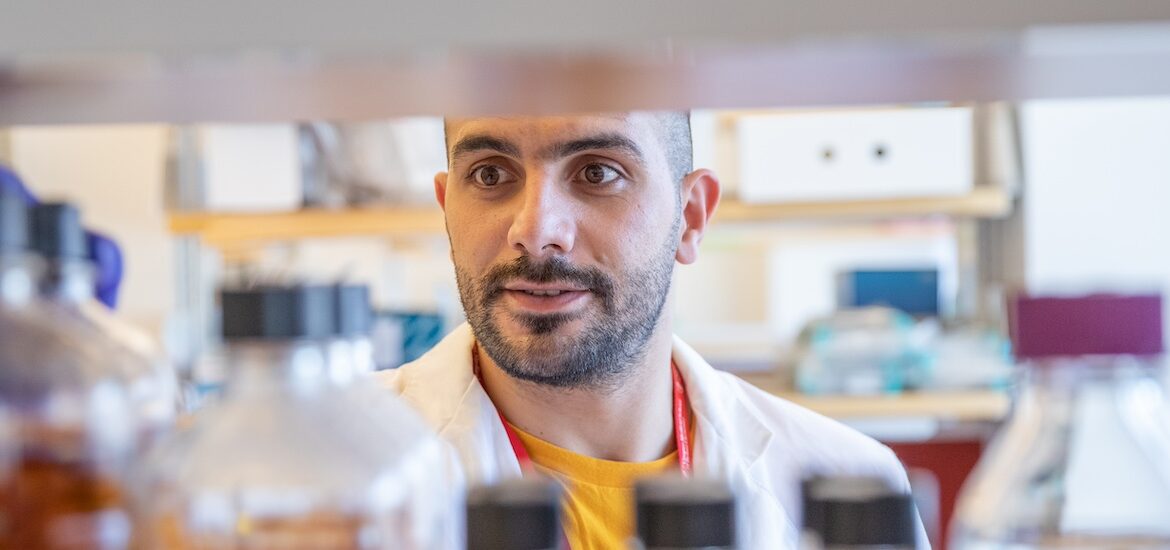
High-Paying, High-Impact Careers Driving the Future of Medicine
If you already hold a bachelor’s degree in chemistry, biochemistry, biology or a related field, you may be feeling ready for more—more responsibility, more impact and more long-term career growth.
A Master of Science (M.S.) in Pharmaceutical Science is designed for scientists who want to advance beyond entry-level lab roles and into positions that shape how medications are developed, tested, regulated and delivered to patients.
Graduates work across pharmaceutical research, biotechnology, clinical trials, regulatory science and product development—often without pursuing a Pharm.D. And with continued global investment in drug innovation, demand for advanced scientific expertise is only growing.
So what can you do with an M.S. in Pharmaceutical Science? Here’s how this degree translates into real-world careers, plus we share authentic career outcomes of a few of our alumni.
High-Demand Career Paths for Pharmaceutical Science Graduates
An M.S. in Pharmaceutical Science builds a broad, flexible skill set that applies across multiple industries. Below are some of the most common (and fastest-growing) roles pursued by graduates in this field.
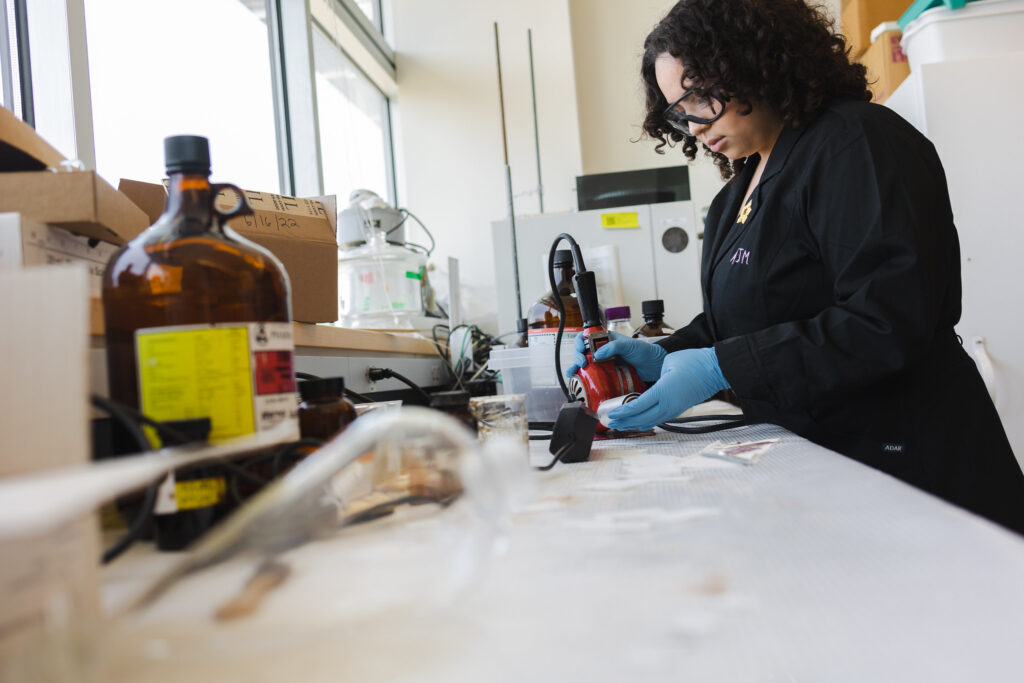
Pharmaceutical Scientist / R&D Scientist
Pharmaceutical scientists play a central role in drug discovery and development. In these positions, professionals design and conduct laboratory experiments, analyze results and help refine formulations that may become future therapies.
In May 2023 (the most recent numbers available), the U.S. Bureau of Labor Statistics (BLS) reported a median annual salary of $100,590 for chemical scientists across the nation, a category that includes many pharmaceutical R&D roles. Demand continues to be driven by innovation in biotech, biologics and personalized medicine.
Regulatory Affairs Specialist
Regulatory affairs specialists ensure that drugs meet FDA and global regulatory standards throughout development, approval and post-market monitoring. These roles are ideal for scientists who enjoy detail-oriented work and operating at the intersection of science, policy and documentation.
According to BLS data from 2023, regulatory-focused compliance roles reported national median salaries ranging from $78,000 to over $90,000 annually, depending on seniority and industry.
Quality Assurance (QA) / Quality Control (QC) Manager
QA and QC professionals maintain safety, consistency and compliance across pharmaceutical manufacturing and testing processes. As regulatory expectations continue to evolve, experienced quality professionals remain in especially high demand.
Industry salary data from 2024 shows QA and QC managers in pharmaceutical settings earning average annual salaries exceeding $115,000 nationwide, according to ZipRecruiter.
Clinical Trials Manager / Clinical Research Associate
Clinical research professionals coordinate and monitor clinical trials that evaluate the safety and effectiveness of new medications. These roles blend scientific expertise with project management and regulatory compliance.
The BLS reported a national median annual salary of $100,590 in 2023 for clinical research–related scientific roles, with steady growth projected through the next decade.
Product Development / Formulation Scientist
Formulation scientists focus on how medications are delivered—determining the safest and most effective way to combine ingredients and produce reliable dosage forms.
Materials and formulation scientists earned a national median salary of $88,620 in 2023, according to the U.S. Bureau of Labor Statistics, with demand supported by ongoing pharmaceutical innovation.
Medical Science Liaison (MSL) / Scientific Communications Specialist
Medical science liaisons serve as scientific experts who communicate complex drug data to healthcare professionals and internal stakeholders. These roles are well suited for scientists who combine technical expertise with strong communication skills.
As of 2024, ZipRecruiter reported a national median annual salary of approximately $154,000 for medical science liaison roles, reflecting both the specialization and strategic importance of the position.
Biotech or Pharmaceutical Project Manager
Project managers oversee timelines, budgets and cross-functional teams across the drug development lifecycle. Professionals with both scientific training and leadership skills are especially valued in these roles.
According to BLS data from 2023, project management professionals in scientific and technical fields earned a median annual salary of $100,750, with continued growth projected.
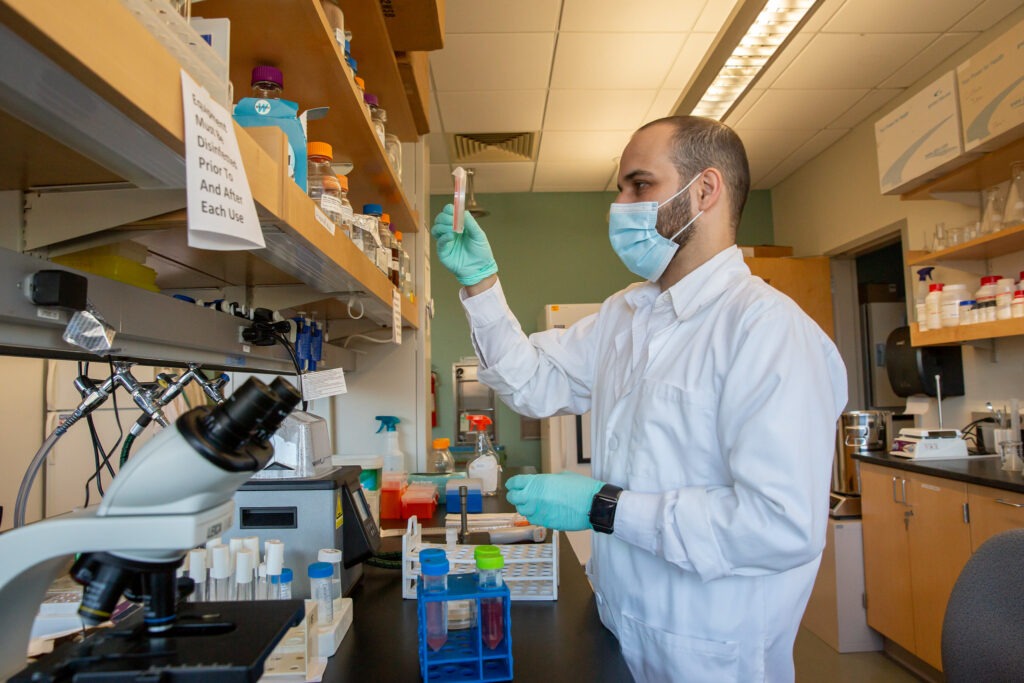
Skills You’ll Build in an M.S. in Pharmaceutical Science Program
An M.S. in Pharmaceutical Science prepares you for more than one career path; it equips you with a durable skill set that evolves alongside the industry.
Advanced Laboratory & Analytical Expertise
Graduate coursework emphasizes modern laboratory techniques, experimental design and analytical tools such as chromatography and spectroscopy. These skills are used daily in pharmaceutical research, development and quality environments.
Regulatory & Compliance Knowledge
Students develop working knowledge of FDA regulations, ethical standards and documentation practices essential to pharmaceutical and biotech careers.
Cross-Functional Collaboration & Project Management
Pharmaceutical science is highly collaborative. Graduate training strengthens your ability to work across research, regulatory, manufacturing and business teams.
Scientific Communication
You’ll learn how to translate complex scientific findings for diverse audiences, which is an essential skill for leadership, regulatory and client-facing roles.
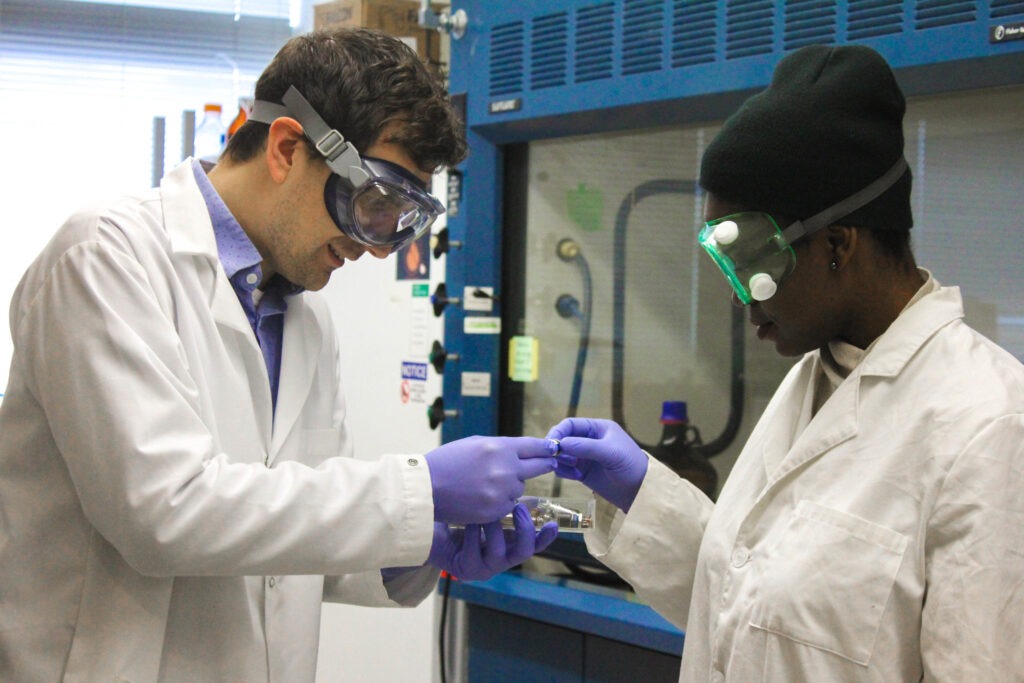
Where Pharmaceutical Science Graduates Work
The global pharmaceutical science market continues to expand, driven by innovation in drug development, biologics and precision medicine.
Graduates commonly work in:
- Pharmaceutical and biotechnology companies
- Clinical research organizations (CROs)
- Government and regulatory agencies
- Academic and industrial research settings
- Hospitals and clinical research centers
Many of these roles offer strong salary potential and long-term career stability compared to national averages.
Rowan MS Pharmaceutical Science Alumni Outcomes
Glory E.
After her graduation five years ago, Glory moved into a role as a QC chemist for Apta Pharma, a role she held for a year. She continued her education, earning a certification in Advanced International Pharmacovigilance and Argus Safety (APVASC) in pharmacovigilance from CCRPS. She then accepted a position as a QC Analyst II at Veranova, an energy company.
Holli-Joi M.
Holli-Joi recently earned her Ph.D. in Pharmaceutical Sciences from the University of North Carolina at Chapel Hill. She will continue her work with UNC, as she accepted a post-doctoral position in the Tropsha Lab where she worked while earning her doctorate. Holli-Joi graduated from Rowan five years ago and embarked on her doctoral journey immediately after earning her MS in pharmaceutical science.
Omar A.
Graduating four years ago with his master’s in pharmaceutical science, Omar then earned his Ph.D. in pharmaceutical chemistry at Rowan University. He is now a postdoctoral fellow at the National Cancer Institute (NCI).
Justin H.
Justin graduated five years ago and has grown his career within industry. Three years ago Justin accepted a position as a field service engineer II for Waters Corporation, a role he still holds today. He previously held the role of scientist I at Hikma Pharmaceuticals for a year and a half, and launched his career through a position as a QC analyst for Teva Pharmaceuticals.

Pharmaceutical Science: Meeting a Growing Global Need
The pharmaceutical science field is expanding rapidly as populations age, chronic disease rates rise and innovation accelerates across drug development, biologics and precision medicine.
According to industry market analyses, the global pharmaceutical market is projected to exceed $880 billion by 2030, driven by increased R&D investment, regulatory complexity and demand for safer, more effective therapies. In parallel, the U.S. Bureau of Labor Statistics continues to project steady growth for chemical scientists, clinical research professionals and regulatory specialists through the next decade.
Behind those numbers are real-world pressures shaping the industry:
- Rising demand for new and personalized therapies
- Increased regulatory scrutiny to ensure drug safety and efficacy
- Growth in biologics, cell and gene therapies and specialty pharmaceuticals
- Expanded clinical research activity across healthcare systems
Together, these trends are creating sustained demand for professionals with advanced training in pharmaceutical science—especially those who can bridge research, regulation and real-world application.
How Rowan University Prepares You for Pharmaceutical Science Careers
Rowan University’s M.S. in Pharmaceutical Science is designed to help students transition from academic training to professional impact.
Hands-On Learning and Research Experience
Students gain practical laboratory and research experience through advanced coursework and applied training, developing skills they can immediately apply in professional settings.
Industry-Aligned Curriculum
Rowan’s curriculum is regularly reviewed by faculty experts to ensure alignment with current industry needs, emerging technologies and regulatory expectations.
Career Support and Professional Growth
Graduate students benefit from academic advising, career resources, small class sizes and opportunities to connect with faculty and peers across scientific disciplines.
Ready to Take the Next Step?
An M.S. in Pharmaceutical Science can help you advance into higher-level scientific roles, increase your earning potential, and make a meaningful impact in a growing field.
Explore Rowan University’s M.S. in Pharmaceutical Science, request more information, or start your application today to see how this program can support your goals.
About Rowan University’s M.S. in Pharmaceutical Science
Rowan University’s Master of Science (M.S.) in Pharmaceutical Science prepares students to meet today’s evolving scientific and regulatory challenges with confidence and expertise.
The program blends advanced scientific training with applied, real-world learning, which helps students understand how drugs are discovered, developed, tested, regulated and brought to market. Graduates are prepared for specialized roles across pharmaceutical research, biotechnology, clinical development, regulatory affairs and quality systems.
Designed with flexibility in mind, Rowan’s M.S. in Pharmaceutical Science supports both early-career scientists and working professionals seeking advancement.
About Rowan
The fastest-growing public research institution in the Northeast and among the country’s top 10 fastest-growing, Rowan University is home to a thriving multidisciplinary environment with a strong emphasis on practical research at the intersection of health care, engineering, science and business.
Carnegie-classified as an R2 (high research activity) institution and operating at R1 (very high research activity), the University partners with industry, government and nonprofit organizations in New Jersey and beyond to drive innovation, while developing the future workforce. Students are essential contributors, presenting at national conferences, sharing credit in professional publications and earning recognition for their work. Selected entrepreneurs receive support through the Rowan Innovation Venture Fund.
Rowan’s partnerships with Virtua Health, Cooper University Health Care and all major health care systems in southern New Jersey distinguish the region as a hub for health care research and education. Rowan is also a key partner with the New Jersey Economic Development Authority in two strategic innovation centers focused on medical technology.
You May Also Be Interested In
- M.S. in Bioinformatics
- M.S. in Medical Laboratory Science
- Industrial Chemistry Certificate of Graduate Study
Your future in pharmaceutical science starts with the right preparation, with the right university.