
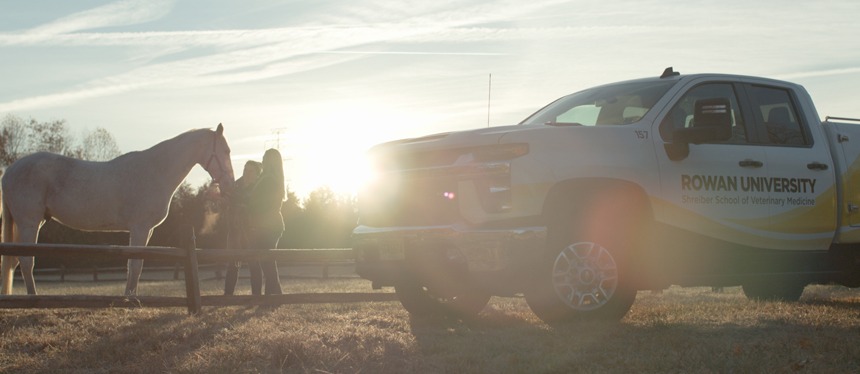
For aspiring veterinarians in New Jersey, getting into veterinary school has historically meant looking beyond the state.
Students in New Jersey who wanted to earn a Doctor of Veterinary Medicine (DVM) had to compete for seats at schools elsewhere, always applying as out-of-state students.
Now New Jersey has its own veterinary school.
The Shreiber School of Veterinary Medicine of Rowan University welcomed its inaugural class in fall 2025 and its second class in 2026. For New Jersey residents, the significance of the school isn’t simply that a veterinary program is now closer to home. It means they have an in-state option with a designated admissions pool, lower resident tuition and opportunities to begin building their veterinary education and professional connections in New Jersey. In other words, Rowan has changed what pursuing a DVM can look like for New Jersey students.
Over time, Rowan’s investment in veterinary education can help keep more veterinary talent in New Jersey, strengthen the state’s animal health network and give pet owners, farmers and other animal owners greater access to veterinary care.
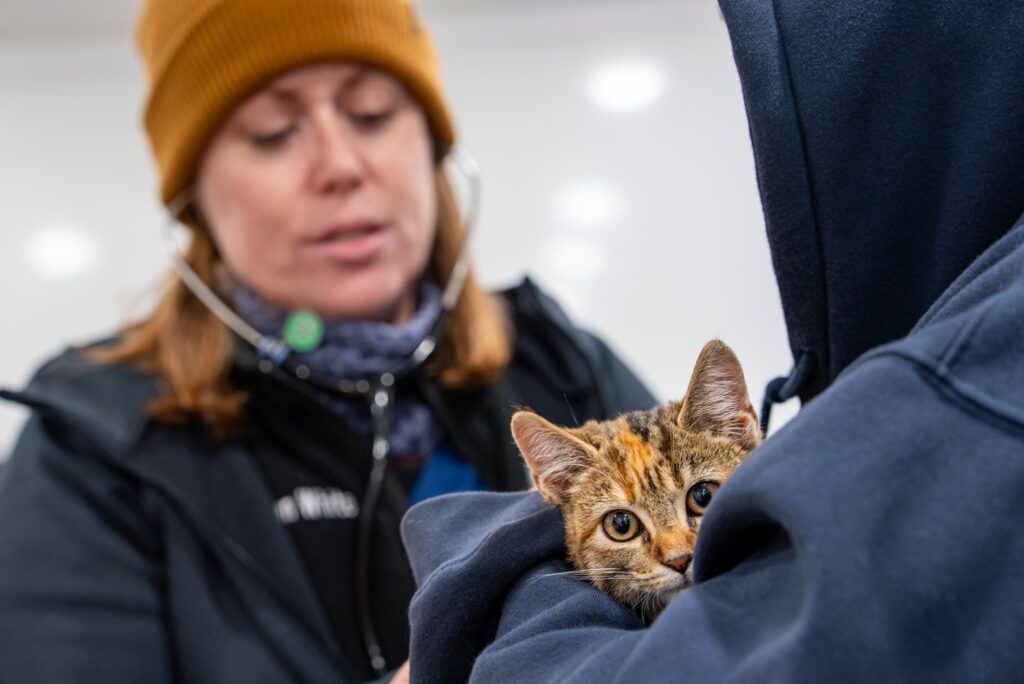
A Veterinary School With an In-State Admissions Pathway
Residency can matter significantly when applying to veterinary school.
Many public veterinary schools give preference to students who live in their state, in part because state funding supports those institutions. Before Rowan’s veterinary school opened, New Jersey students did not have that kind of in-state veterinary school option.
The Shreiber School evaluates DVM applicants through separate in-state and out-of-state pools. Rowan anticipates that approximately half of each incoming class will be New Jersey residents and half will come from outside the state.
The impact is already visible in the school’s first two classes.
The inaugural class included 40 New Jersey residents among 75 students, with New Jersey residents representing sixteen of the state’s 21 counties. The second class grew to 90 students, including 50 New Jersey residents representing 15 of New Jersey’s 21 counties.
By educating more veterinarians in New Jersey and connecting them with the state’s animal health community, Rowan’s veterinary school can help strengthen the local veterinary workforce and expand access to care for the pet owners, farmers and others who depend on it.
For a New Jersey student pursuing veterinary medicine, that creates an opportunity that did not exist before: competing for a place in a DVM program through an in-state applicant pool rather than applying only to veterinary schools elsewhere.
That doesn’t eliminate competition or guarantee admission. But it gives New Jersey residents another route to veterinary school, in their home state.
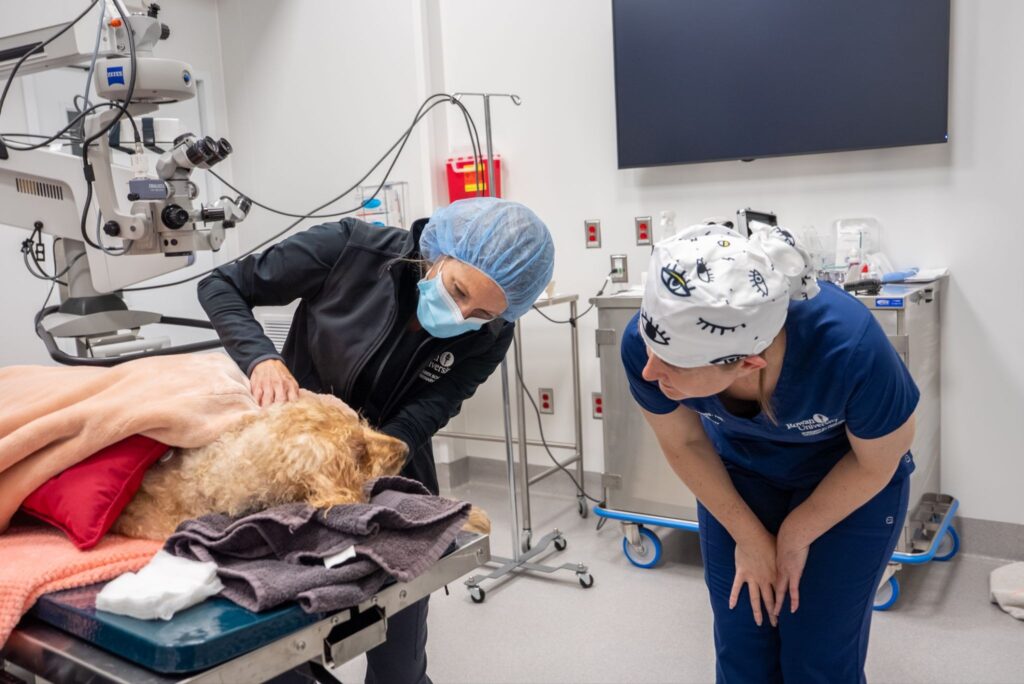
The In-State Tuition Difference
The benefits of an in-state veterinary school aren’t limited to admissions.
Tuition is another significant part of the equation.
For the 2026–27 academic year, Rowan University’s Shreiber School of Veterinary Medicine lists tuition at $39,375 for New Jersey residents. By comparison, the average annual out-of-state tuition at U.S. veterinary schools is approximately $58,412, based on the American Association of Veterinary Medical College’s (AAVMC) Cost Comparison Tool. This means that New Jersey residents attending Rowan pay approximately $19,037 less per year than the out-of-state comparison.
Over four years, that difference could amount to approximately $76,148 in tuition savings, assuming rates remained constant. This is an illustrative comparison, not a projection: tuition varies by school and academic year.
Still, the current rates make one point clear: for eligible New Jersey residents, attending the state’s veterinary school can substantially change the cost of earning a DVM compared with paying out-of-state tuition.
And the financial consideration doesn’t end with tuition. Rowan estimates additional annual expenses for housing and food, transportation, books and supplies, personal expenses and other costs. Those expenses can vary by student and circumstances. For students who were previously considering out-of-state veterinary schools, staying in-state can make the difference between driving home for the holidays vs. purchasing a plane ticket to do so.
For New Jersey families considering veterinary school, having an in-state option therefore changes both the admissions landscape and the financial calculation.
Why Study Veterinary Medicine in New Jersey?
New Jersey may be one of the smallest states, but it offers veterinary students an unusually diverse range of animal populations, habitats and industry connections. From one of the nation’s most active equine communities to 130 miles of coastline, the state provides opportunities to explore veterinary medicine across a variety of settings.
For students at Rowan University’s Shreiber School of Veterinary Medicine, those resources extend beyond the classroom. The school’s location connects students with organizations, professionals and industries working in animal health throughout New Jersey.
A State With Distinctive Opportunities in Animal Medicine
Equine and large-animal medicine: New Jersey has more horses per square mile than any other state. The U.S. Equestrian Team is headquartered here, and the horse is even the state’s official animal and is included on the state flag. For students interested in equine and large-animal medicine, New Jersey’s equestrian community offers a distinctive environment in which to explore this area of veterinary practice.
New Jersey has more horses per square mile than any other state.
Marine and wildlife medicine: New Jersey’s 130 miles of coastline create opportunities to learn about animal health in coastal and marine environments. Shreiber’s affiliate partnerships include organizations such as the Marine Mammal Stranding Center and Sea Turtle Recovery, which work in marine animal rescue and care. The school also has more than 60 affiliate partnerships supporting student interests in wildlife medicine, zoo medicine and other areas of veterinary practice.
Animal health and pharmaceuticals: New Jersey has a significant pharmaceutical and life sciences presence, including Merck Animal Health and Zoetis, the world’s largest animal health company. The state is also home to major compounding pharmacies serving the veterinary market, including Wedgewood Pharmacy, Stokes Pharmacy and Epicur Pharma. For students interested in the business, research or pharmaceutical sides of veterinary medicine, these industries offer a broader perspective on career possibilities beyond clinical practice.
How Does Rowan’s Shreiber School Connect Students With These Opportunities?
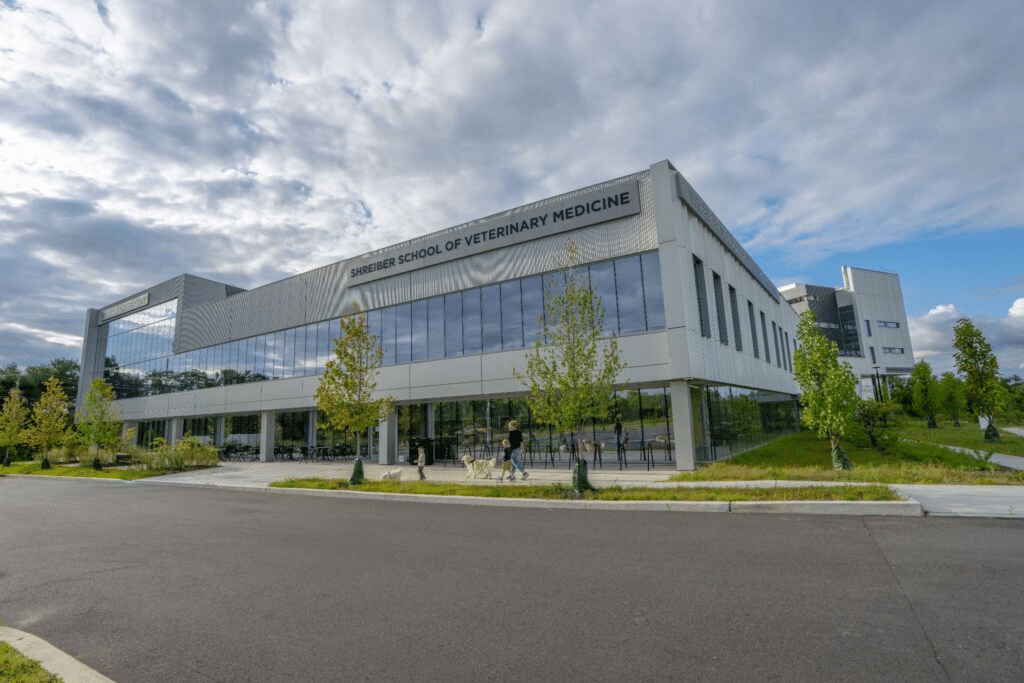
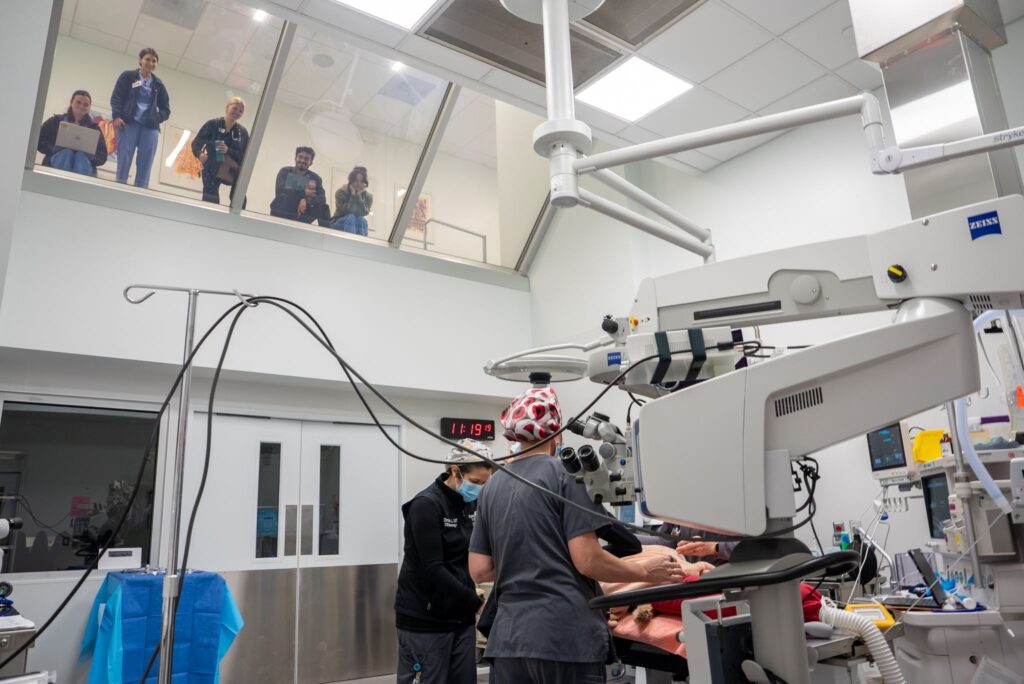
The Shreiber School is located on Rowan’s West Campus in Harrison Township, approximately 18 miles southeast of Philadelphia. Its 167,000-square-foot facility includes academic spaces, educational and diagnostic laboratories, and a multispecialty teaching hospital that is open to the public.
Students receive clinical training through Rowan facilities, including the teaching hospital, equine and large-animal ambulatory service, and shelter medicine facilities. The school also works with more than 70 outside partners to provide additional learning experiences.
The curriculum includes clerkships in areas such as:
- Shelter medicine
- Small-animal primary care
- Emergency and critical care
- Large-animal field service
- Clinical pathology
- Anesthesia
- Specialty medicine
- Diagnostic imaging
- Dentistry
These experiences introduce students to different types of veterinary practice, patient populations and clinical settings as they develop their skills.
How Can Students Build Connections in New Jersey’s Veterinary Community?
Studying in New Jersey also gives students opportunities to become familiar with the state’s veterinary professionals and organizations. Shreiber has a relationship with the New Jersey Veterinary Medical Association, where students can network with practicing veterinarians and attend continuing education programming at the association’s annual conference.
For students who hope to practice in New Jersey after graduation, these connections can help them begin building professional relationships and learn more about the state’s veterinary community while still in school.
At Rowan, students can pursue a veterinary education while developing an understanding of the animal populations, industries and professional networks that make New Jersey a distinctive place to study veterinary medicine.
Building a Veterinary Community in the State
A veterinary school can also become a point of connection between students, practicing veterinarians, animal owners and communities.
Rowan’s teaching hospital is open to the public, creating a clinical setting where veterinary students learn alongside practicing professionals while animals receive care. The school also has outside clinical partners and community engagement programs.
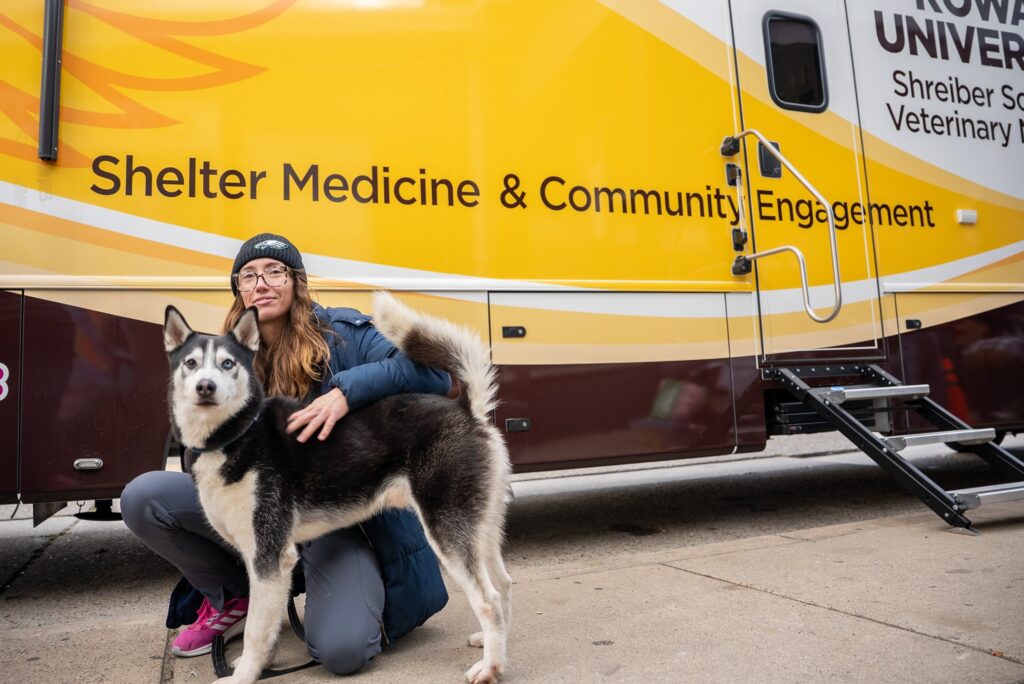
The university has already brought veterinary education into communities through initiatives such as its mobile veterinary unit and community outreach efforts.
That connection matters for New Jersey residents in two directions.
Students can train and establish professional relationships within the state. At the same time, New Jersey communities gain another institution focused on veterinary education, animal health and veterinary services.
The school is also developing programs beyond the DVM. Its M.S. in One Health launched its inaugural class in fall 2026 and focuses on the connections among human, animal and environmental health.
What Rowan’s Veterinary School Means for New Jersey Residents
What has changed is that New Jersey residents now have an option they did not have before.
They can pursue a DVM through New Jersey’s first and only veterinary school, with an admissions process that includes an in-state applicant pool and tuition rates that recognize New Jersey residency. They can also complete their veterinary education in New Jersey, gaining clinical experience and building professional connections within the state.
For aspiring veterinarians who want to build their education and potentially their careers in New Jersey, Rowan has changed the equation.
The school doesn’t guarantee admission or determine where its graduates will ultimately practice. What it does is give New Jersey residents another path to becoming veterinarians — one that begins and, for those who choose it, can continue right here in New Jersey.
Additionally, over time, by educating more veterinarians in New Jersey and connecting them with the state’s animal health community, Rowan’s veterinary school can help strengthen the local veterinary workforce and expand access to care for the pet owners, farmers and others who depend on it.
About Schreiber School of Veterinary Medicine
The Shreiber School of Veterinary Medicine is shaping the future of veterinary medicine and animal healthcare in keeping with Rowan University’s strategic pillars of Access, Affordability, Quality, and Economic Engine. Our innovative curriculum, exceptional veterinary care, compassionate community service, and commitment to research will ensure our graduates will be prepared to serve society and meet the challenges in veterinary medicine now and in the future.
Our mission will be achieved by:
- Pioneering discovery of new knowledge in basic and applied sciences to address regional, national, and global concerns in human and animal health.
- Utilizing an innovative clinical curriculum that combines experiential learning in a university teaching hospital with clinical partnerships to ensure clinically competent and well-rounded veterinary graduates.
- Collaborating with partners in the Rowan community, industry, and government veterinary institutions to broaden the lens of education in veterinary medicine, preparing our graduates to serve society in a multitude of roles.
- Expanding the availability of veterinary care to underserved communities in the region and graduating compassionate and culturally aware veterinarians to be the leaders of tomorrow in community service and engagement.
The Shreiber School of Veterinary Medicine received provisional accreditation from the American Veterinary Medical Association Council on Education (AVMA COE) on September 2, 2025. Accreditation is an important consideration for prospective veterinary students because graduates of accredited programs are eligible to sit for the North American Veterinary Licensing Examination (NAVLE), subject to applicable requirements.
About Rowan
The fastest-growing public research institution in the Northeast and among the country’s top 10 fastest-growing, Rowan University is home to a thriving multidisciplinary environment with a strong emphasis on practical research at the intersection of health care, engineering, science and business.
Carnegie-classified as an R2 (high research activity) institution and operating at R1 (very high research activity), the University partners with industry, government and nonprofit organizations in New Jersey and beyond to drive innovation, while developing the future workforce. Students are essential contributors, presenting at national conferences, sharing credit in professional publications and earning recognition for their work. Selected entrepreneurs receive support through the Rowan Innovation Venture Fund.
Rowan’s partnerships with Virtua Health, Cooper University Health Care and all major health care systems in southern New Jersey distinguish the region as a hub for health care research and education. Rowan is also a key partner with the New Jersey Economic Development Authority in two strategic innovation centers focused on medical technology.