
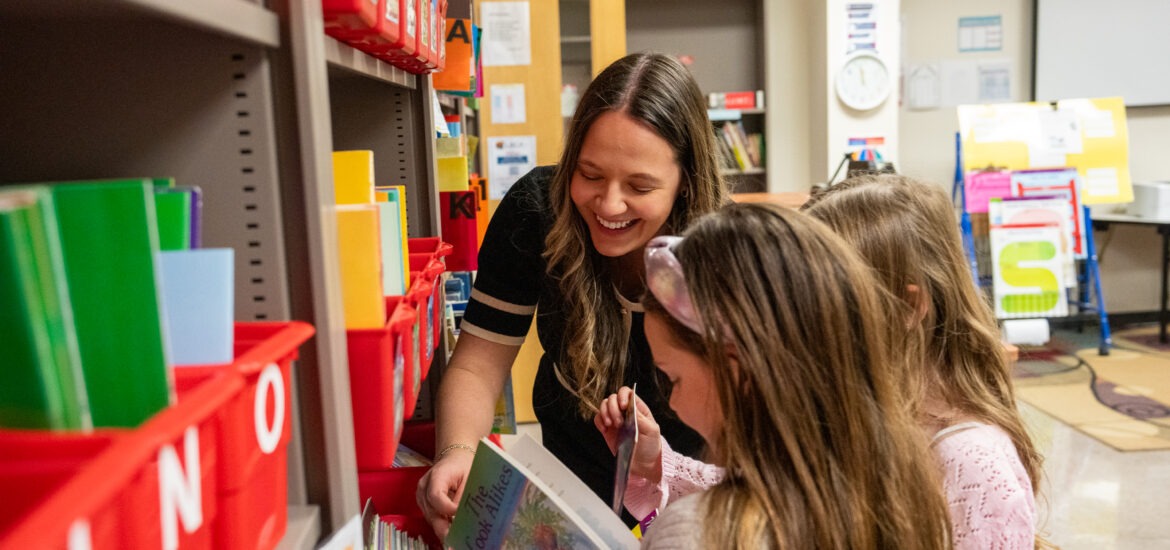
Turning Curiosity Into a Clear Next Step
After graduating from Rowan University with her bachelor’s degrees in Elementary Education and Literacy Studies, Kaitlyn G. stepped into her own classroom ready to teach. But by her second year, she knew she wanted more for her students and for herself as an educator.
With a growing passion for literacy, she felt a strong drive to develop a deeper understanding of how to support every learner.
She began asking more intentional questions about her students:
Why do some students struggle with reading?
How do you identify what each learner truly needs?
And how do you plan instruction that actually helps them grow?
That curiosity led her back to Rowan University to pursue her Master of Arts (M.A.) in Reading Education.
Why Kaitlyn Chose Rowan for her Master’s in Reading Education
Having discovered her passion for literacy during her undergraduate years at Rowan, returning for her graduate degree felt like a natural next step.
For Kaitlyn, Rowan feels like home.
“It is a place where I know if I need help, support, guidance, or any type of feedback, I’ll receive it immediately.”
That sense of support and connection played a meaningful role in her decision. She knew she would be returning to a community that shows up for each other and where she could continue growing in a way that fit both her goals and her classroom experience.
What Sets Rowan’s M.A. in Reading Program Apart
An Integrated Approach to Literacy and Leadership
Dr. Xiufang Chen, Professor of Language and Literacy Education and Chair of the Department of Critical Literacy, Technology and Multilingual Education at Rowan University, emphasizes that the program’s integrated approach is a key differentiator.
“We combine research, theory, clinical practice and leadership development, which is a rare integration,” Chen said.
That combination matters because it prepares teachers to assess literacy needs, analyze data, design interventions, coach peers, and support schoolwide literacy improvement. As a nationally accredited program, it reflects alignment with best practices in literacy education.
For certified teachers who want to become literacy coaches, Reading Specialists, or interventionists, that breadth of preparation can make a major difference.
Supervised Hands-On Clinical Experiences
One of the most distinctive parts of Rowan’s M.A. in Reading Education is the Reading Clinic, a signature service-learning site with more than 80 years of history.
For decades, the clinic has served as a community resource, supporting thousands of K–12 learners while giving graduate students the opportunity to make a significant impact through real-world experience.
Students roll up their sleeves and work directly with learners, conducting literacy assessments to pinpoint areas of need and designing targeted instruction focused on word recognition, fluency, comprehension, and writing. They individualize instruction using culturally responsive approaches that reflect each student’s interests and background.
Each tutoring cycle includes approximately 20 hours of one-to-one instruction and concludes with a detailed report that provides strategies and recommendations to support continued growth.
For Kaitlyn, the clinic was one of the most powerful and meaningful parts of the program.
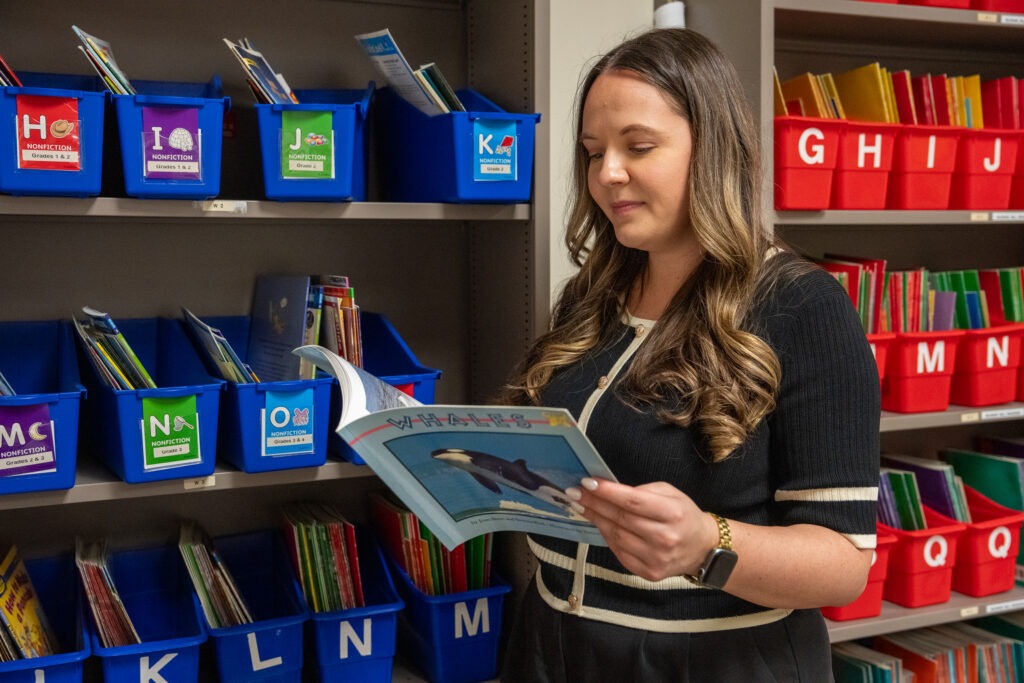
“My time in the Reading Clinic is something that I’ll always treasure,” she said. “One of my favorite parts was the direct feedback that came from the professors. I was able to challenge my thinking and constantly reflect. Their feedback has really, truly impacted my literacy instruction.”

That kind of supervised, hands-on experience not only builds skill, but gives educators the clarity and confidence to support every learner more effectively.
Faculty Mentorship That Lasts Beyond Graduation
Graduate students often look closely at curriculum, flexibility, and certification outcomes. For Kaitlyn, one of the most memorable parts has been her professors.
“The faculty within the reading department is top-notch,” she says. “Even in my career now, I often think back to their words of wisdom.”
She says the encouragement, guidance, and commitment from professors helped her stay motivated and prepared, and those relationships did not end when the program did.
“Ten years after graduating from Rowan as an undergrad, I still feel that level of support. One email and it’s that immediate connection again.”
Kaitlyn credits faculty such as Dr. Chen, Dr. Lee, Dr. Browne, and Dr. Madden for shaping her development as a literacy educator. She also shared that Dr. Chen’s mentorship has extended from her undergraduate years through graduate study, including collaborative research, conference presentations, and publication.
That long-term relationship means students are learning alongside faculty who remain invested in their growth and continue to show up well beyond graduation.
Lifelong Connections Within a Supportive Cohort
The support Kaitlyn received extended beyond faculty. She has built a strong professional network through her cohort.
“My time within the program has given me lifelong friendships,” Kaitlyn shares. “We connect on social media, and any time someone within my master’s cohort is seeking a new job opportunity or looking for advice, we continue to support each other, even though we’re in different places in our lives and in different districts.”
“I’m always able to rely on someone from Rowan to continue to grow.”
A Master’s Degree That Changed How She Teaches
Kaitlyn’s experience in the program has changed the way she approaches teaching.
“One of the things that still is at the forefront of my teaching is the multicultural education,” Kaitlyn says. “That has changed my class from being a group of students into a family.”
Her instruction became more intentional, inclusive, and responsive to student needs. She began selecting texts that reflect the diversity of her classroom and creating space for students to connect their identities, cultures, and experiences to what they are learning.
The program also strengthened how she uses assessment to guide instruction, helping her more effectively identify student needs and plan targeted lessons.
“My experience here has really helped me shape many students’ lives,” she says.
That kind of transformation is exactly what many educators are looking for when considering a master’s in reading education.
A New Level of Confidence in the Classroom and Beyond
As Kaitlyn’s knowledge grew, so did her confidence.
“I developed a different level of confidence through this program, and that truly makes me feel very comfortable in the classroom,” she says.

She points to literacy assessment as one of the areas where that growth was most noticeable.
“I’ve gained a lot of confidence and knowledge in giving assessments to students specific to their literacy needs,” Kaitlyn says. “The assessments that I’ve been taught throughout this program have really transcended into not only my instruction, but being able to fill the gap for students and being able to see what specific areas that they might need improvement with.”
That confidence also shows up in how she interacts with others.
“I can go into any parent meeting, any intervention with a student, any meeting amongst staff, and truly feel comfortable with the knowledge that I have and being able to share it with others.”
For educators considering a master’s in reading education, that kind of confidence can be one of the most valuable returns on the degree. It helps teachers make informed decisions, advocate for students, and lead with greater clarity.
From Classroom Teacher to Schoolwide Impact
Within her district, Kaitlyn has had the opportunity to mentor new teachers and serve in a lead teacher role.
“I feel like my impact has gone beyond my classroom,” she says. “And that is because of this program.”
Dr. Chen emphasizes that this is a key shift.
Reading specialists move beyond delivering instruction to leading literacy improvement across classrooms and schools. They support colleagues, guide data-driven decisions, and help shape schoolwide strategies.
This broader impact is what draws many educators to pursue the degree.
Preparing for Reading Specialist Certification in New Jersey
The timing to pursue a master’s in reading education has never been more relevant.
Beginning in Fall 2026, New Jersey will require teachers in remedial literacy positions in grades P–3 to hold either a Reading Specialist or Early Literacy Specialist certification. That shift is increasing demand for educators with advanced literacy training and specialized credentials.
Eligibility for Reading Specialist certification requires three years of full-time teaching experience, reinforcing the need for both classroom experience and specialized preparation.
Rowan’s M.A. in Reading Education is designed to help educators meet evolving expectations while deepening their literacy expertise and preparing for Reading Specialist roles.
“Our program prepares students for Reading Specialist certification,” says Dr. Chen. “After completing the program, they can apply for certification, which is granted by the New Jersey Department of Education (NJDOE).”
Kaitlyn experienced this preparation firsthand.
“The program thoroughly prepared me for certification through intentional, well-sequenced coursework,” she says.
Is a Master’s in Reading Education Worth It?
For Kaitlyn, the value of the program is clear.
“This program is truly the best educational decision I have made for myself as an educator,” she says. “I still find myself regularly looking back at my coursework as a reference in my day-to-day teaching and decision-making.”
“If you’re on the fence, 100% do it.”
She believes the program is especially valuable for teachers who want to keep growing in their careers while making a bigger difference for students.
“This program provided me with the strongest preparation I have received as a classroom teacher,” Kaitlyn said. “It strengthened my instructional practice, expanded my understanding of literacy, and built my confidence to support all learners and pursue a future in literacy education.”
That impact extends across all types of learners and career paths.
“Whether you are supporting struggling readers, challenging exceptional learners, or preparing for leadership roles in literacy, the program helps you feel prepared, supported, and confident in your work.”
Dr. Chen adds that graduate degrees can also support long-term career growth, including increased earning potential, while giving educators knowledge they can apply immediately in the classroom.
For certified teachers who want to deepen their literacy expertise, prepare for Reading Specialist certification, and grow into leadership roles, Rowan’s M.A. in Reading Education offers a clear next step.
A Three-Time Rowan Student. A Career That Keeps Growing.
Kaitlyn’s momentum hasn’t stopped. Her goals keep growing.
She is now pursuing her Ed.D. in Educational Leadership, a decision inspired by the mentorship and support she found through Rowan’s master’s program.
“My next goal is to become a Reading Specialist within my district,” she shares. “From there, I hope to grow into a supervisor role or possibly even a principal role, something in administration.”
“For any teacher looking to advance their career and grow both professionally and personally, Rowan is the place to do it.”
About Rowan
A top 100 national public research institution, Rowan University offers bachelor’s through doctoral and professional programs in person and online to nearly 25,000 students. The fastest-growing public research institution in the Northeast and among the country’s top 10 fastest-growing, Rowan offers a thriving multidisciplinary environment with a strong emphasis on practical research in health care, engineering, science and business, while ensuring excellence in undergraduate education. Nationally recognized for innovation, high-quality, affordable education and public-private partnerships, Rowan is one of two universities in the U.S. to offer M.D., D.O. and D.V.M. degree programs.