
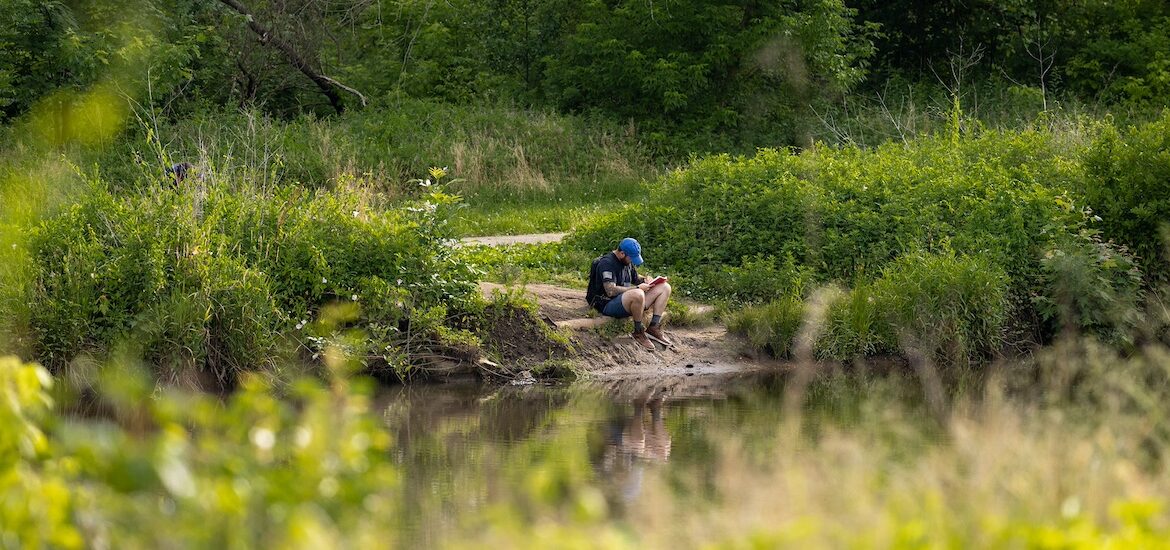
There’s a difference between learning about ecosystems and standing inside one.
Rowan University students can now participate in an immersive environmental learning experience connected to New Jersey’s Pine Barrens. While this education extends far beyond lecture halls and lab spaces, it will still earn students traditional college credit.
Through a partnership between Rowan University’s Department of Biological & Biomedical Sciences and Pinelands Adventures, students enroll in a course designed to step into forests, paddle through waterways and experience firsthand one of the state’s most significant natural environments.
Staff at Pinelands Adventures lead these experiences, designed in concert with Rowan faculty, and participant learning is evaluated by Rowan faculty. The goal is not simply teaching environmental concepts. It’s helping students develop a deeper understanding of the world around them and their role within it.
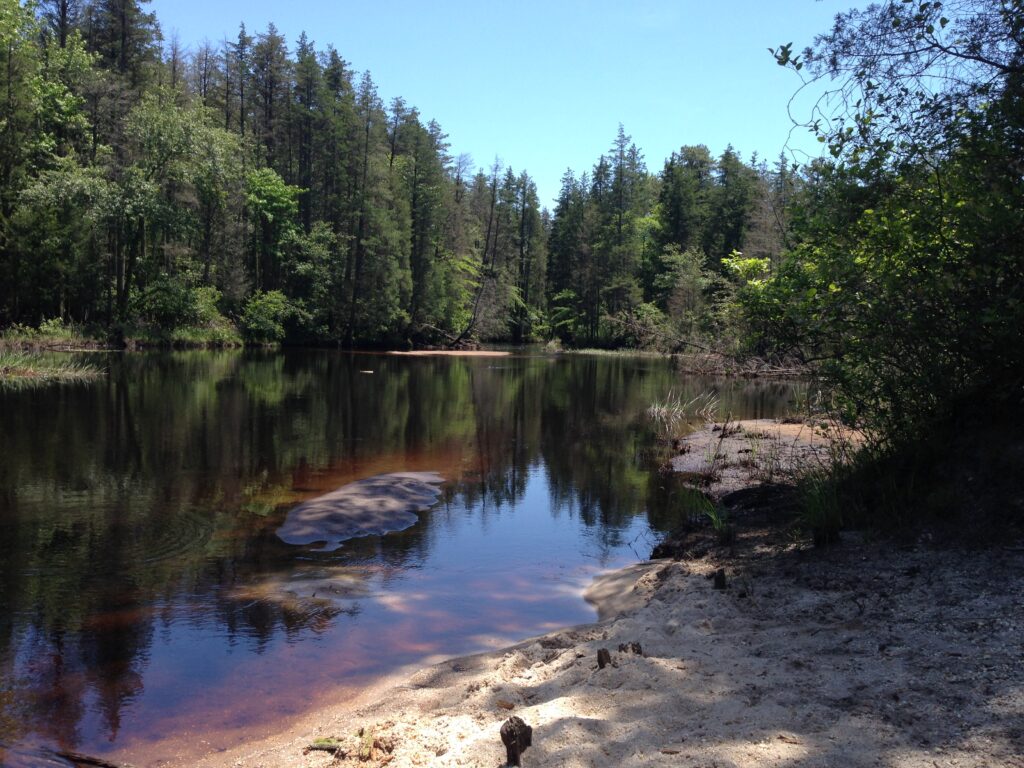
Why Experiential Learning Matters in Environmental Education
Environmental systems are complex. While classrooms provide critical foundations in biology, ecology and conservation, some lessons become clearer when students encounter them directly.
Students in this immersive learning experience engage with place-based education, an approach that emphasizes learning through direct interaction with local environments.
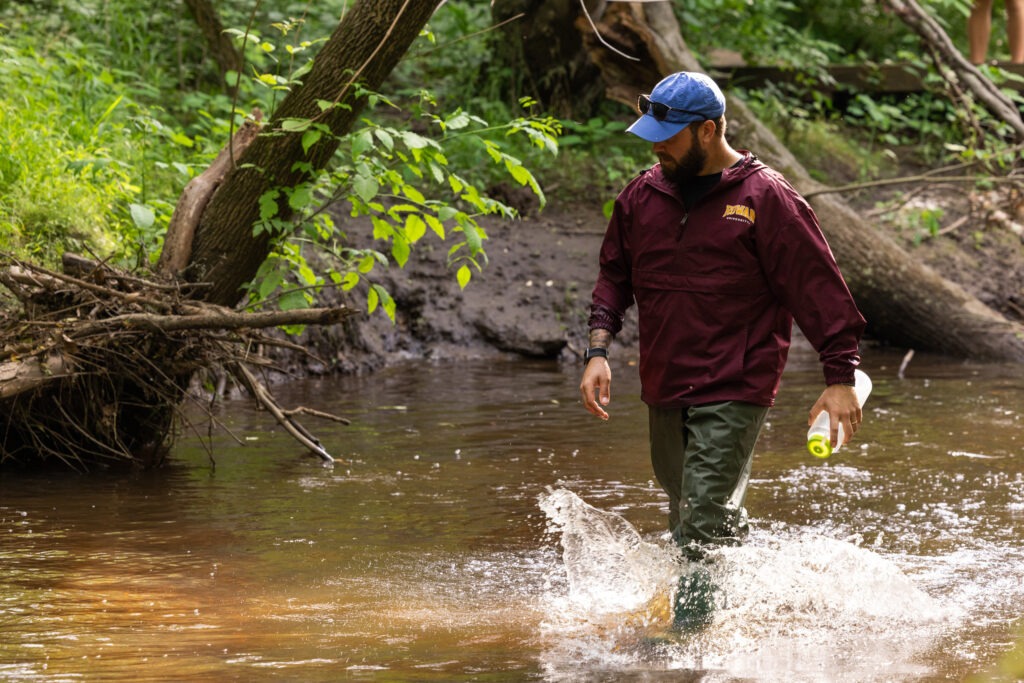
“Getting people out in the woods, getting their hands in the water and really interacting with the environment and with other species creates a different kind of understanding,” explains Rowan faculty member and environmental educator Dr. Nathan Ruhl, who developed this course at Rowan.
Rather than observing nature through screens or slides, students experience it through multiple senses. They see ecosystems in action, hear wildlife, touch the water – all the while noticing detail and nuance within the environment. This is the beginning of connecting classroom concepts to real places.
That connection often becomes transformational.
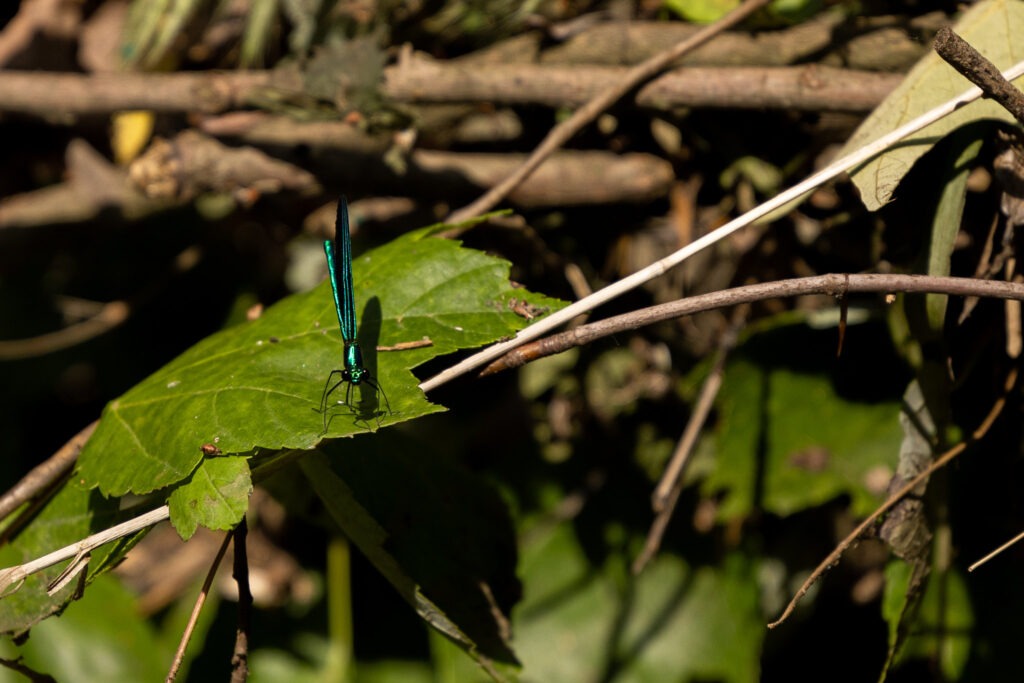
Discovering One of New Jersey’s Greatest Natural Resources
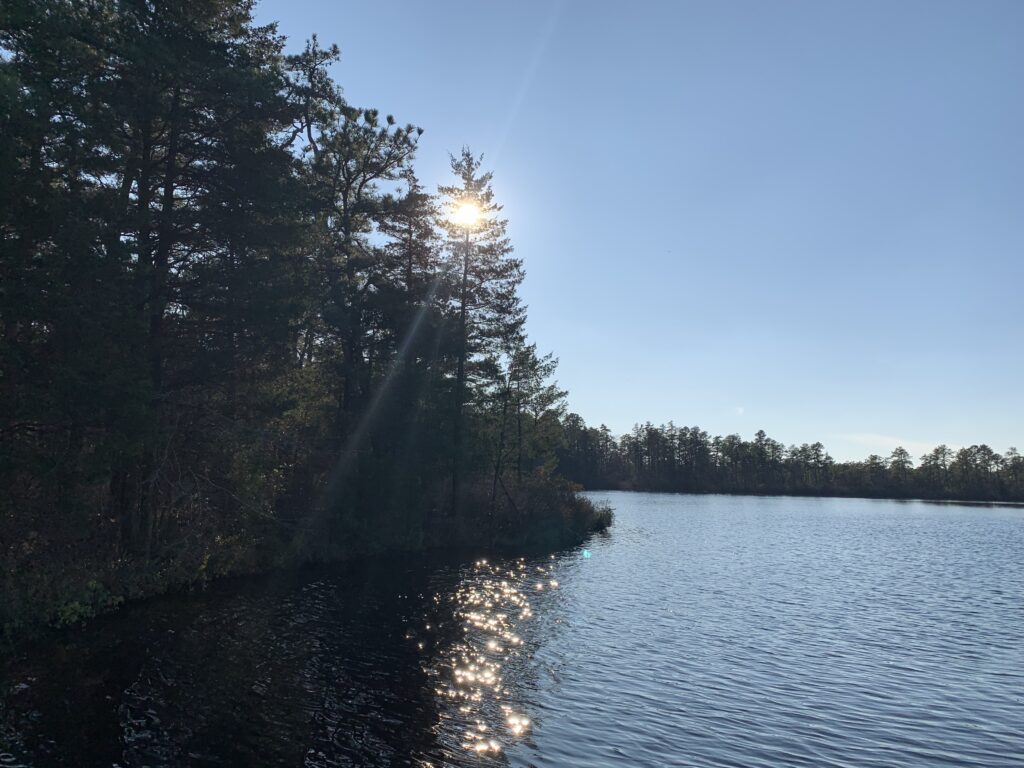
Many people are surprised to learn that New Jersey contains one of the largest preserved forest regions on the East Coast.
The Pine Barrens represent an expansive natural landscape that exists alongside one of the most densely populated states in the nation.
Helping students experience that contrast firsthand is central to the Rowan University-Pinelands Adventures partnership’s mission.
Faculty at Rowan and the staff at Pinelands Adventures hope students leave with a greater appreciation for local ecosystems and the species that live in them. They want students to recognize the value of conservation and understand why these spaces matter.
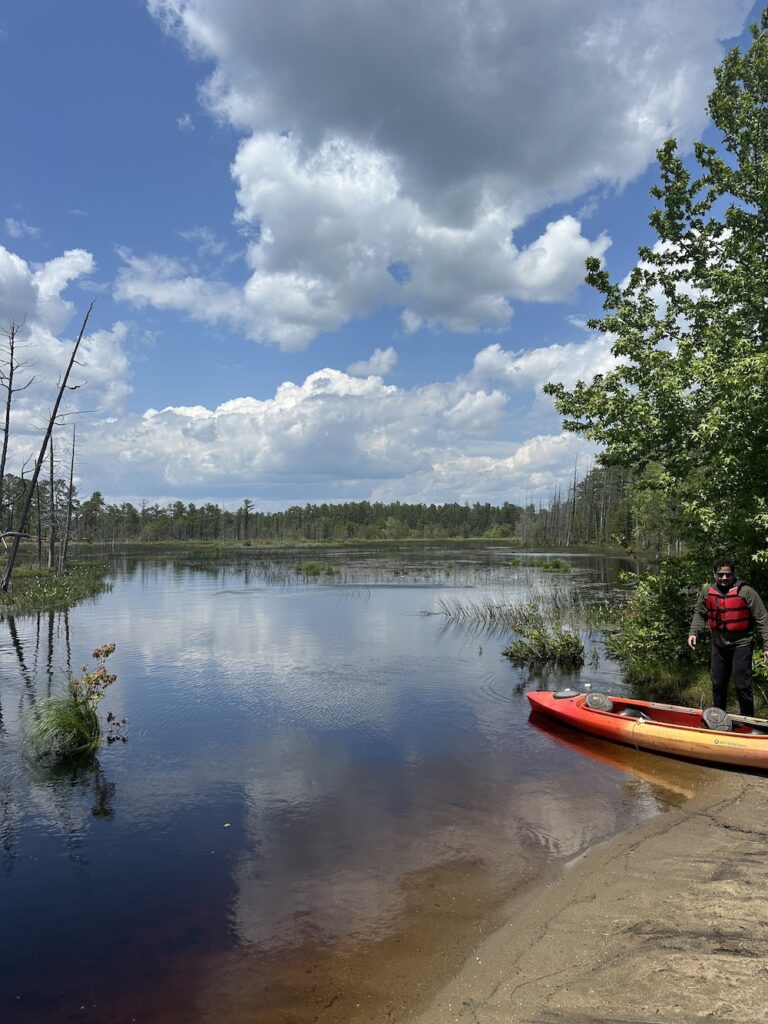
The experience is intentionally immersive. We know of no other elective course at the university where you can earn college credit while paddling waterways within the Pine Barrens.
Rowan has many field experiences built into traditional course offerings, but this course is different. Deep in the heart of the Pine Barrens, students disconnect from not only technology, but also their daily routines, for several hours at a time.
Immersing oneself in a new environment forces people’s brains to build new associations with the material they are learning, and this improves long-term retention. Fully engaging with the environment, while learning, enhances students’ understanding of not only the material, but also their understanding of themselves, their place in the world, and how they want to contribute to the world professionally upon graduation.
Students Bring Different Experiences of Nature
One of the most compelling parts of outdoor education is that students arrive with vastly different backgrounds.
Some grew up in rural communities surrounded by open land. Others come from urban environments where access to natural spaces may have been limited.
For some students, entering the forest can feel unfamiliar or even intimidating.
But that discomfort often becomes part of the growth.
Faculty members have observed students initially hesitant to explore outdoor spaces later describing those experiences as some of the most meaningful moments of their academic journey.
The experience creates opportunities for students to encounter environments they may never have realized existed in their own state.
Even students from communities located near the Pine Barrens sometimes discover they had never truly explored the landscape around them.
Learning to Think About Conservation and the Future
As New Jersey continues to evolve and develop, environmental education becomes increasingly relevant.
Students participating in immersive outdoor experiences are encouraged to think critically about balancing conservation, development and resource management.
Conversations explore issues such as changing landscapes, water conservation and environmental stewardship while giving students the tools to form their own perspectives.
The objective isn’t to provide predetermined answers.
The goal is to encourage students to become informed citizens who understand environmental challenges and thoughtfully consider solutions.
The Experiences That Shape a Career
For Dr. Ruhl, the passion for environmental education started early.
Growing up in Vermont, time spent near water sparked curiosity about how humans interact with natural systems. Later experiences teaching scuba diving and participating in ecological field research deepened that interest and eventually shaped a career in science and education.
Those formative moments continue to influence how he designs educational experiences today.
Students will not all follow the same path.
But every student’s path will include opportunities to explore, question and discover.
Sometimes a transformative experience starts with something simple: standing in a place you’ve never been, asking a question you’ve never considered or seeing the natural world differently than you did before.
And sometimes, learning begins by stepping outside.
Internship & Experiential Learning Stories
Learn how Rowan Profs go beyond the classroom to grow professionally, as well as personally, through internships and other experiential learning. Experiential learning includes hands-on learning opportunities provided through research, student clubs, campus leadership, student worker jobs, service-learning projects and volunteerism. In addition, Rowan’s Career and Professional Development Services Office provides career support that’s more than just advice – it’s events, connections and real guidance to help students thrive after college.
About Rowan’s Biological Sciences Major
Students studying biological sciences explore the living world, from cells and genetics to ecosystems and human health. Through coursework in biology, chemistry and laboratory sciences, students develop the scientific knowledge, research skills and critical thinking needed to investigate complex biological questions.
Experiential learning through research, internships and fieldwork gives students opportunities to apply classroom knowledge while preparing for careers in healthcare, biotechnology, environmental science, research and beyond.
The bachelor of science (BS) in biological sciences gives future researchers and medical professionals a solid foundation for future graduate study and professional experience. The bachelor of art (BA) in biological sciences is ideal for students who do not plan to pursue careers as scientific researchers, and will instead pair the degree with a complementary discipline applicable to their professional path. Both programs are available on Rowan’s Glassboro, NJ, campus. In addition, Rowan Online offers a BA in biological sciences.
About Rowan
A top 100 national public research institution, Rowan University offers bachelor’s through doctoral and professional programs in person and online to nearly 25,000 students. The fastest-growing public research institution in the Northeast and among the country’s top 10 fastest-growing, Rowan offers a thriving multidisciplinary environment with a strong emphasis on practical research in health care, engineering, science and business, while ensuring excellence in undergraduate education. Nationally recognized for innovation, high-quality, affordable education and public-private partnerships, Rowan is one of two universities in the U.S. to offer M.D., D.O. and D.V.M. degree programs.
About Pinelands Adventures
Pinelands Adventures is an initiative of Pinelands Alliance and offers a variety of educational programs about the Pinelands, as well as paddling, hiking and nature tours. The mission statement of Pinelands Alliance is to protect and advocate for New Jersey’s Pinelands through collaborative action, research and education. Founded in 1989, Pinelands Alliance protects New Jersey’s 1.1 million-acre Pinelands National Reserve and its surrounding communities. The National Reserve includes 800,000 acres of forest, one of North America’s largest and healthiest aquifers, rare plants and animals and a fascinating history.