

Healthcare leadership roles are evolving, and many nursing leadership positions increasingly call for graduate-level preparation, particularly as nurses move into administrative, executive, education, informatics and systems-level roles. As hospitals and health systems face workforce challenges, an aging population, growing patient complexity and organizational pressures, nurse executives play an important role in shaping nursing practice, supporting care teams and advancing organizational priorities.
Below, we examine the key factors shaping demand for nurse executive leadership in 2026, what those roles entail and how a specialized Master of Science in Nursing (MSN) with a Nurse Executive concentration can prepare nurses for leadership roles in changing healthcare environments.
What Is a Nurse Executive? And Why the Role Matters
Nurse executives are high-level nursing leaders who help oversee nursing practice and operations within healthcare organizations. According to the American Nurses Association (ANA), common nurse executive titles include:
- Director of nursing
- Chief nursing officer (CNO)
- Chief nurse executive (CNE)
In nurse leadership jobs at the executive level, professionals integrate clinical insight with organizational management. Their responsibilities can include developing policies and standards, supporting nursing practice, managing teams and collaborating with other executives on organizational goals.
Nurse executives may also influence workplace culture, workforce development, quality improvement and patient care by helping connect nursing practice with broader organizational strategy.
Healthcare Trends Fueling Demand for Executive Nursing Leadership
Healthcare organizations are managing workforce shortages, an aging population and increasing operational complexity. These conditions place additional demands on nursing leaders who must balance quality care with staffing, resources, technology, policy changes and organizational priorities.
According to the American Hospital Association, nurse executives are playing important roles in responding to changing care models. Current priorities include leadership development for mid-level managers, policy advocacy and organizational strategies focused on systemic improvements.

Aging Populations and Rising Care Demand
The U.S. population is getting older. According to the U.S. Census Bureau’s latest population estimates, 61.2 million people age 65 and older lived in the United States in 2024, representing 18% of the U.S. population. The 65-and-older population increased 3.1% from 2023 to 2024 and has grown significantly faster than the working-age population in recent years.
Older adults are more likely to live with chronic conditions and may require more complex care. As the population ages, healthcare organizations need nursing leaders who can help plan for changing care needs, workforce requirements and resource allocation.
For nurse executives, that can mean helping organizations adapt nursing practice and care delivery to an increasingly complex patient population.
Staffing Shortages and Burnout Among Clinical Leaders
Nursing is both a calling and a profession, and clinical work can be physically and emotionally demanding. Burnout remains an important concern for the nursing workforce.
The American Nurses Association has documented significant levels of nurse burnout, including survey findings from 2020. More recent workforce research continues to identify burnout, staffing challenges and working conditions as important issues for healthcare organizations.
For nurse leaders, the challenge extends beyond supporting individual nurses. Leaders must also consider staffing models, workforce development, retention, professional development and the systems that shape nurses’ working environments.
As experienced nurses move into retirement and organizations work to develop the next generation of leaders, graduate-level preparation can provide one pathway for nurses seeking greater responsibility in administration and organizational leadership.
Employer Expectations: Why Advanced Degrees Matter
As models for nursing care delivery shift, graduate education can open additional pathways for nurses interested in leadership, administration, education, informatics and systems improvement.
According to the American Association of Colleges of Nursing (AACN), nurses with master’s degrees can pursue roles including nurse managers, clinical educators, nurse administrators, health policy consultants and other leadership positions.
An advanced degree is not a universal requirement for every nursing leadership position. Requirements vary by role, organization and level of responsibility. However, graduate-level education can provide nurses with preparation beyond clinical practice for those seeking to move into organizational leadership.
Leadership Competencies Health Systems Value
In nurse leadership jobs, professionals create a connection between clinical care and organizational strategy. Health systems need leaders who understand nursing practice while also developing the skills to supervise teams, communicate across departments, evaluate systems and contribute to organizational decision-making.
Leadership skills such as communication, strategic planning, quality improvement, research and an understanding of healthcare policy can be developed through graduate nursing education. For nurses pursuing executive leadership, that broader perspective can complement years of clinical experience.
Salary and Career Outlook for Nurse Executives
The U.S. Bureau of Labor Statistics (BLS) projects strong employment growth for medical and health services managers, an occupational category that includes a range of healthcare management roles.
Employment of medical and health services managers is projected to grow 24% from 2025 to 2035, much faster than the average for all occupations. The BLS reports a median annual wage of $123,860 as of May 2025.
These figures apply to the broader medical and health services managers occupational category, not specifically to nurse executives. Compensation for nurse leadership roles varies by position, organization, location, experience and other factors.
Director of Nursing Roles
The director of nursing role is a high-level administrative position that can involve overseeing nursing units and departments within a healthcare facility. Directors of nursing may also participate in budgeting, staffing, policy development, quality improvement and other administrative responsibilities.
Educational requirements vary by employer. An advanced nursing degree such as an MSN, DNP, DNS or PhD may be preferred or required depending on the organization and position. Leadership experience and professional certification can also be important qualifications.
Chief Nursing Officer (CNO) Roles
In chief nursing officer (CNO) positions, nurse leaders collaborate with organizational executives to develop strategies and policies related to nursing practice and care delivery.
According to the ANA, CNOs are responsible for nursing practice across an organization. Depending on the organization, their responsibilities may include workforce strategy, quality, patient care, professional practice and organizational planning.
There is no single “chief nursing officer degree.” Nurses pursuing CNO roles may hold graduate degrees such as an MSN or doctoral degree, along with significant clinical, leadership and administrative experience. The ANA also offers the Nurse Executive Advanced certification for experienced nurse leaders who meet its eligibility requirements.

Why an MSN in Nurse Executive Leadership Prepares You for Demand
An MSN with a Nurse Executive concentration can prepare nurses for leadership responsibilities in health systems and other healthcare organizations.
The online MSN: Nurse Executive program at Rowan University offers 100% online coursework and prepares registered nurses for leadership roles within their organizations. The Nurse Executive concentration focuses on issues facing today’s healthcare organizations, including biomedical and information technology advances, healthcare reform legislation, escalating costs and diminished reimbursement and a multigenerational workforce.
The program’s curriculum includes topics such as:
- Integrated Information Technology in Health Care
- Advanced Health Assessment
- Advanced Nursing Research
- Advanced Pathophysiology
- Advanced Pharmacology
- Leadership & Care Delivery Environment
- Special Issues & Trends in Nursing
The program requires 36–53 graduate credits and is designed for registered nurses who already hold a bachelor’s degree in nursing.
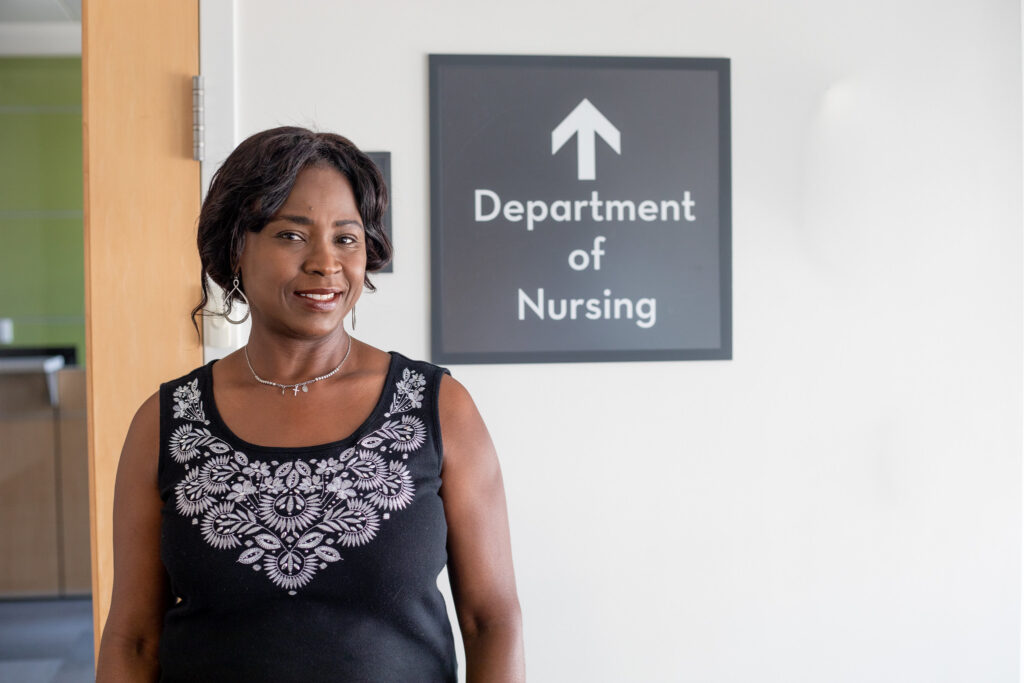
Rowan made it easy for me to go back to continue my education. They respect the fact that you’re a practice nurse, and they just add to what you already have.
Rochelle H., MSN graduate
Business and Financial Acumen
Nurse executives operate at the intersection of clinical practice and organizational leadership. Depending on their role, they may be involved in staffing, resource decisions, organizational priorities, quality initiatives and other issues that require an understanding of how healthcare organizations operate.
Graduate nursing education can help nurses expand their perspective beyond individual patient care to consider the systems in which care is delivered.

Policy and Organizational Strategy
Nurse executives are not only leaders within their organizations. They can also serve as advocates for nursing and participate in discussions about healthcare policy, workforce development and changes affecting care delivery.
Understanding healthcare policy and organizational strategy can help nurse leaders evaluate how external changes may affect their teams and organizations. For nurses pursuing executive roles, this systems-level perspective can complement clinical expertise and leadership experience.
Health Systems and Technology Leadership
Healthcare technology continues to evolve, from electronic health records and clinical information systems to data analytics and emerging artificial intelligence tools.
Nurse executives need to understand how technology affects nursing practice, care delivery and organizational decision-making. Rowan’s Nurse Executive curriculum includes Integrated Information Technology in Health Care, giving students an opportunity to examine technology within the context of healthcare.
Real-World Evidence: Jobs and Opportunities in 2027
The American Association of Colleges of Nursing notes that the nursing workforce continues to evolve, including changes in workforce demographics and educational preparation.
For nurses interested in leadership, potential career paths can include:
- Nurse manager
- Director of nursing
- Nurse administrator
- Nurse executive
- Nurse educator
- CNO
In 2027 and beyond, nurse leaders will need to navigate workforce changes, persistent staffing challenges, regulatory developments and the growing use of technology and artificial intelligence in healthcare settings.
For nurse executives in particular, that means making decisions that connect data, clinical expertise, workforce needs and organizational strategy.
How to Choose the Right Nurse Executive Degree Program
Whether you are interested in nurse manager or nurse executive roles or anything in between, pursuing graduate nursing education represents a significant step.
The program that you select can influence your preparation for future leadership responsibilities, so consider an accredited program with a curriculum aligned with your career goals. Look for coursework that develops leadership, research, technology, healthcare systems and other competencies relevant to the role you want to pursue.
Online options can also be useful for nurses who are continuing to work while earning their graduate degree.
Rowan University offers a flexible online MSN: Nurse Executive program with 100% online coursework. Rowan’s MSN programs also offer asynchronous courses, active faculty engagement and part-time coursework, allowing nurses to continue their professional careers while pursuing graduate education.
Explore Rowan’s MSN Nurse Executive Leadership Program
As healthcare organizations respond to workforce challenges, changing patient needs, technology and evolving models of care, nurse executives have an important role to play in shaping how nursing care is delivered.
Rowan Online prepares nurses for that responsibility through its MSN: Nurse Executive program, which combines graduate nursing education with coursework focused on leadership, healthcare technology, research and care delivery.
Rowan also offers an online MSN: Nurse Educator for nurses interested in teaching, staff education and leadership within their area of expertise.
Rowan’s online MSN: Nurse Executive program requires 36–53 credits and is 100% online. The 2026–27 academic year lists a completion range of 24–60 months, depending on the student’s course load and progression through the program.
Request more information about Rowan’s online nursing master’s programs or apply to Rowan to take the next step in your nursing education.
About Rowan Online
Rowan Online empowers learners throughout the region with high-quality, accessible and affordable online education backed by the innovation and forward-thinking of Rowan University. Rowan’s flexible online programs seamlessly connect students to award-winning faculty and industry leaders, comprehensive student support services and academic resources—no matter where they are. In collaboration with Rowan’s nationally ranked colleges and schools, Rowan Online delivers bachelor’s, master’s and doctoral programs in high-demand, future-focused fields. Guided by employer insight and industry-driven curriculum, Rowan Online prepares students to excel in a rapidly evolving workforce and lead in their professions and communities.