

Internship & Experiential Learning Stories Learn how Rowan Profs go Beyond the Classroom to grow professionally, as well as personally, through internships and other experiential learning. Experiential learning includes hands-on learning opportunities provided through research, student clubs, campus leadership, student worker jobs, service-learning projects and volunteerism. In addition, Rowan’s Office of Career & Professional Development provides career support that’s more than just […]
internships
Grit & Greatness

Additional Student Wellness Stories Keep reading student wellness stories to learn how Rowan Profs support their mental, physical and emotional well-being. Through Rowan Thrive, Rowan University provides a comprehensive framework designed to help students live in alignment with their values and cultivate resilience across six core areas of well-being. Internship & Experiential Learning Stories Learn […]
Interning Remotely as a Business Management Major

Internship & Experiential Learning Stories Learn how Rowan Profs go Beyond the Classroom to grow professionally, as well as personally, through internships and other experiential learning. Experiential learning includes hands-on learning opportunities provided through research, student clubs, campus leadership, student worker jobs, service-learning projects and volunteerism. In addition, Rowan’s Office of Career & Professional Development provides career support that’s more than just […]
Why It’s Okay To Be Emotionally Vulnerable

Additional Student Wellness Stories Keep reading student wellness stories to learn how Rowan Profs support their mental, physical and emotional well-being. Through Rowan Thrive, Rowan University provides a comprehensive framework designed to help students live in alignment with their values and cultivate resilience across six core areas of well-being. Internship & Experiential Learning Stories Learn […]
Pandemic Profs: Prof Pups

Internship & Experiential Learning Stories Learn how Rowan Profs go Beyond the Classroom to grow professionally, as well as personally, through internships and other experiential learning. Experiential learning includes hands-on learning opportunities provided through research, student clubs, campus leadership, student worker jobs, service-learning projects and volunteerism. In addition, Rowan’s Office of Career & Professional Development provides career support that’s more than just […]
Three Things I Love About My Major

Internship & Experiential Learning Stories Learn how Rowan Profs go Beyond the Classroom to grow professionally, as well as personally, through internships and other experiential learning. Experiential learning includes hands-on learning opportunities provided through research, student clubs, campus leadership, student worker jobs, service-learning projects and volunteerism. In addition, Rowan’s Office of Career & Professional Development provides career support that’s more than just […]
As We Evolve, So Does Our Music

Additional Student Wellness Stories Keep reading student wellness stories to learn how Rowan Profs support their mental, physical and emotional well-being. Through Rowan Thrive, Rowan University provides a comprehensive framework designed to help students live in alignment with their values and cultivate resilience across six core areas of well-being. Internship & Experiential Learning Stories Learn […]
History Major Finds Her Passion for Archiving During Internship

Internship & Experiential Learning Stories Learn how Rowan Profs go Beyond the Classroom to grow professionally, as well as personally, through internships and other experiential learning. Experiential learning includes hands-on learning opportunities provided through research, student clubs, campus leadership, student worker jobs, service-learning projects and volunteerism. In addition, Rowan’s Office of Career & Professional Development provides career support that’s more than just […]
Me Time

Additional Student Wellness Stories Keep reading student wellness stories to learn how Rowan Profs support their mental, physical and emotional well-being. Through Rowan Thrive, Rowan University provides a comprehensive framework designed to help students live in alignment with their values and cultivate resilience across six core areas of well-being. Internship & Experiential Learning Stories Learn […]
Perseverance

Additional Student Wellness Stories Keep reading student wellness stories to learn how Rowan Profs support their mental, physical and emotional well-being. Through Rowan Thrive, Rowan University provides a comprehensive framework designed to help students live in alignment with their values and cultivate resilience across six core areas of well-being. Internship & Experiential Learning Stories Learn […]
Why It’s Important to Say No

Additional Student Wellness Stories Keep reading student wellness stories to learn how Rowan Profs support their mental, physical and emotional well-being. Through Rowan Thrive, Rowan University provides a comprehensive framework designed to help students live in alignment with their values and cultivate resilience across six core areas of well-being. Internship & Experiential Learning Stories Learn […]
Body Positivity: A Beginner’s Guide

Additional Student Wellness Stories Keep reading student wellness stories to learn how Rowan Profs support their mental, physical and emotional well-being. Through Rowan Thrive, Rowan University provides a comprehensive framework designed to help students live in alignment with their values and cultivate resilience across six core areas of well-being. Internship & Experiential Learning Stories Learn […]
Public Relations Major Lands Full-Time Job After Internship

Meet Ciara Sikking, senior Public Relations and Mathematics double major, from Buena, NJ (Atlantic County). She shares how her summer internship at Holman turned into a full-time position post-graduation. In October of last year I sat down with my public relations advisor, Lori Block, to discuss class registration. I did not expect this very routine […]
The Five Aspects, Not Stages, of Grief

Additional Student Wellness Stories Keep reading student wellness stories to learn how Rowan Profs support their mental, physical and emotional well-being. Through Rowan Thrive, Rowan University provides a comprehensive framework designed to help students live in alignment with their values and cultivate resilience across six core areas of well-being. Internship & Experiential Learning Stories Learn […]
Period Shame

Additional Student Wellness Stories Keep reading student wellness stories to learn how Rowan Profs support their mental, physical and emotional well-being. Through Rowan Thrive, Rowan University provides a comprehensive framework designed to help students live in alignment with their values and cultivate resilience across six core areas of well-being. Internship & Experiential Learning Stories Learn […]
Well-being

Additional Student Wellness Stories Keep reading student wellness stories to learn how Rowan Profs support their mental, physical and emotional well-being. Through Rowan Thrive, Rowan University provides a comprehensive framework designed to help students live in alignment with their values and cultivate resilience across six core areas of well-being. Internship & Experiential Learning Stories Learn […]
The Importance of a Good Night’s Sleep

Additional Student Wellness Stories Keep reading student wellness stories to learn how Rowan Profs support their mental, physical and emotional well-being. Through Rowan Thrive, Rowan University provides a comprehensive framework designed to help students live in alignment with their values and cultivate resilience across six core areas of well-being. Internship & Experiential Learning Stories Learn […]
Quit Vaping

Additional Student Wellness Stories Keep reading student wellness stories to learn how Rowan Profs support their mental, physical and emotional well-being. Through Rowan Thrive, Rowan University provides a comprehensive framework designed to help students live in alignment with their values and cultivate resilience across six core areas of well-being. Internship & Experiential Learning Stories Learn […]
Eat More, It’s Good for You

Additional Student Wellness Stories Keep reading student wellness stories to learn how Rowan Profs support their mental, physical and emotional well-being. Through Rowan Thrive, Rowan University provides a comprehensive framework designed to help students live in alignment with their values and cultivate resilience across six core areas of well-being. Internship & Experiential Learning Stories Learn […]
First Disaster Preparedness & Emergency Management Graduate Reflects on His Rowan Experience

Internship & Experiential Learning Stories Learn how Rowan Profs go Beyond the Classroom to grow professionally, as well as personally, through internships and other experiential learning. Experiential learning includes hands-on learning opportunities provided through research, student clubs, campus leadership, student worker jobs, service-learning projects and volunteerism. In addition, Rowan’s Office of Career & Professional Development provides career support that’s more than just […]
Toxic Friend Groups

Part of a series with Rowan University’s Wellness Center, this collaboration aims to educate students about personal well-being options. For further updates, follow @rowanuwellness on social. Meet Jessica Hassell, a second-year Higher Education Administration track graduate student who wrote this article to start a discussion about toxic friendships. She shares, “I hope that this article will […]
The Importance Of Recognizing Disordered Eating Behaviors

Additional Student Wellness Stories Keep reading student wellness stories to learn how Rowan Profs support their mental, physical and emotional well-being. Through Rowan Thrive, Rowan University provides a comprehensive framework designed to help students live in alignment with their values and cultivate resilience across six core areas of well-being. Internship & Experiential Learning Stories Learn […]
Marketing and Supply Chain & Logistics Major Erin DeBiasse Shares Her Passionate Work Ethic

Internship & Experiential Learning Stories Learn how Rowan Profs go Beyond the Classroom to grow professionally, as well as personally, through internships and other experiential learning. Experiential learning includes hands-on learning opportunities provided through research, student clubs, campus leadership, student worker jobs, service-learning projects and volunteerism. In addition, Rowan’s Office of Career & Professional Development provides career support that’s more than just […]
The Mental Health Benefits of Cosplay

This article is part of a running series with Rowan University’s Wellness Center. This collaboration aims to educate students about personal well-being options. For further updates, follow @RowanUWellness on Twitter, Instagram or Facebook. Meet Allison Niemiec, a first year graduate student in the Higher Education Administrative Track program, who wrote this article because cosplay has been […]
Beyond the Classroom: Interning in Israel

Meet Alyssa Salera, a junior from East Greenwich, NJ (Gloucester County) majoring in Biochemistry from the College of Science & Mathematics. This summer, Alyssa interned in Israel at a rehabilitation hospital, where she worked closely with physical therapists and patients. Today, she will share with us her experience abroad. Where did you intern this summer? […]
Best of Both Worlds: International Student Merges Love of Marketing & Basketball at Internship

Internship & Experiential Learning Stories Learn how Rowan Profs go Beyond the Classroom to grow professionally, as well as personally, through internships and other experiential learning. Experiential learning includes hands-on learning opportunities provided through research, student clubs, campus leadership, student worker jobs, service-learning projects and volunteerism. In addition, Rowan’s Office of Career & Professional Development provides career support that’s more than just […]
Beyond the Classroom: Marketing Major Interns at Rohrer’s Center for Professional Development

Internship & Experiential Learning Stories Learn how Rowan Profs go Beyond the Classroom to grow professionally, as well as personally, through internships and other experiential learning. Experiential learning includes hands-on learning opportunities provided through research, student clubs, campus leadership, student worker jobs, service-learning projects and volunteerism. In addition, Rowan’s Office of Career & Professional Development provides career support that’s more than just […]
Beyond the Classroom: a Biophysics Lab Experience

Internship & Experiential Learning Stories Learn how Rowan Profs go Beyond the Classroom to grow professionally, as well as personally, through internships and other experiential learning. Experiential learning includes hands-on learning opportunities provided through research, student clubs, campus leadership, student worker jobs, service-learning projects and volunteerism. In addition, Rowan’s Office of Career & Professional Development provides career support that’s more than just […]
Alumni Success: Julia Lechner, From NJ to LA

Alumni Success Stories Explore how our alumni propel their Rowan University education into lasting success, as highlighted through our alumni success series. From Rowan University student to lifelong member of the Rowan University Alumni Association, Rowan Profs thrive at every stage of their journey. Go Profs! Internship & Experiential Learning Stories Learn how Rowan Profs […]
Future Pediatrician Shares Her Summer Lab Experience At Rowan

Internship & Experiential Learning Stories Learn how Rowan Profs go Beyond the Classroom to grow professionally, as well as personally, through internships and other experiential learning. Experiential learning includes hands-on learning opportunities provided through research, student clubs, campus leadership, student worker jobs, service-learning projects and volunteerism. In addition, Rowan’s Office of Career & Professional Development provides career support that’s more than just […]
Leading Camden Middle Schoolers to “All Pull Together”

“I’m never going to be afraid to do anything ever again,” says senior Kasey DiSessa. “If I can cheer and sing in front of judgmental sixth graders, I can do anything.” The biological sciences and English double major lost her self-consciousness and found her voice this summer as an intern for the Children’s Defense Fund […]
Political Science Major Interns for Prosecutor’s Office

Meet Melissa Kolaski, a rising senior from Barrington (Camden County) majoring in Political Science with a minor in Communication Studies. This year, she was able to partake in an internship with the Camden County Prosecutor’s Office, which she says helped her realize her true passion.

Upon attending Rowan, Kolaski says she enrolled in an American Government class, which opened her eyes to her love of government. Classes such as Women in American Politics and History of New Jersey gave her the opportunity to study her passion as well as inspire her to become a woman in government.
Kolaski is in her third year of undergrad within the “3 + 3 program,” which allows students to graduate with a bachelor’s degree and attend law school for another three years. She is also an active member in the Pre-Law Society on campus.
A member of the Camden County Prosecutor’s Office spoke on a panel for Political Science majors earlier this year. Kolaski, who was actively looking for an internship at the time, realized that they were offering the perfect internship opportunity she was looking for. Within this investigative undergraduate internship, Kolaski has the opportunity to work closely with prosecutors, detectives and secretaries on many of their various cases. She even gets to attend the courts along with the prosecutors.
She says, “The members of the trial team at the Camden County Prosecutor’s Office are so helpful and able to answer all of my questions and give me endless advice on law school.”

After this upcoming school year, she will attend law school and hopefully obtain a legal internship.
Like what you see, come visit us!
Story and photography by:
Chad Wittmann, senior journalism major
Journalism Alumnus Tells His Journey to His Dream Career

Alumni Success Stories Explore how our alumni propel their Rowan University education into lasting success, as highlighted through our alumni success series. From Rowan University student to lifelong member of the Rowan University Alumni Association, Rowan Profs thrive at every stage of their journey. Go Profs! Internship & Experiential Learning Stories Learn how Rowan Profs […]
Political Science Major Joins NJ Assembly Republican Office in Exciting Internship

Internship & Experiential Learning Stories Learn how Rowan Profs go Beyond the Classroom to grow professionally, as well as personally, through internships and other experiential learning. Experiential learning includes hands-on learning opportunities provided through research, student clubs, campus leadership, student worker jobs, service-learning projects and volunteerism. In addition, Rowan’s Office of Career & Professional Development provides career support that’s more than just […]
Rowan: Not My First Choice, But My Best Choice

Internship & Experiential Learning Stories Learn how Rowan Profs go Beyond the Classroom to grow professionally, as well as personally, through internships and other experiential learning. Experiential learning includes hands-on learning opportunities provided through research, student clubs, campus leadership, student worker jobs, service-learning projects and volunteerism. In addition, Rowan’s Office of Career & Professional Development provides career support that’s more than just […]
Passing the Torch: Public Relations and Advertising Grad Gives Advice

Internship & Experiential Learning Stories Learn how Rowan Profs go Beyond the Classroom to grow professionally, as well as personally, through internships and other experiential learning. Experiential learning includes hands-on learning opportunities provided through research, student clubs, campus leadership, student worker jobs, service-learning projects and volunteerism. In addition, Rowan’s Office of Career & Professional Development provides career support that’s more than just […]
Exploratory Studies Student Finds His Passion: Political Science

Internship & Experiential Learning Stories Learn how Rowan Profs go Beyond the Classroom to grow professionally, as well as personally, through internships and other experiential learning. Experiential learning includes hands-on learning opportunities provided through research, student clubs, campus leadership, student worker jobs, service-learning projects and volunteerism. In addition, Rowan’s Office of Career & Professional Development provides career support that’s more than just […]
Computer Science Major Kick-Starts her Career with Co-Op Experience

Internship & Experiential Learning Stories Learn how Rowan Profs go Beyond the Classroom to grow professionally, as well as personally, through internships and other experiential learning. Experiential learning includes hands-on learning opportunities provided through research, student clubs, campus leadership, student worker jobs, service-learning projects and volunteerism. In addition, Rowan’s Office of Career & Professional Development provides career support that’s more than just […]
Political Science Alumnus Highlights Internships as Path to Public Service Career

How did Bill pave his way from undergraduate student to successful politician? One word: internships! “Use the time you have during your undergraduate years to pursue as many internships as possible,” he says. “They provide the opportunity to focus on your interests, and help narrow the scope of where you want to be when you […]
Inspiring Change Through Biology and Africana Studies

“Sophomore year, I took an introductory course to Africana Studies as an elective and fell in love with it. It opened my eyes to so many things — politics, race, issues in society. I decided, ‘I have to add this minor!’” she says. Her involvement from there snowballed as she acquired leadership positions in the […]
Music Industry Major Works With Dream Company

During the summer of 2018, Devon interned with Sponsorships, then Premium Seat Sales in the fall. She anticipated challenges going into her sales position, but overcame issues faced with sales by integrating a different personality needed for the job. Her hard work paid off because she now works for Live Nation as a Scheduling Coordinator […]
From Rowan RTF to CBS

Brandon Ward, Radio/TV/Film major, landed the internship of a lifetime with a company he admires dearly. From traveling around the city of Philadelphia and seeking #trends online to watching breaking news happen live, Brandon got a dose of the action-packed new station career. Last summer, Brandon, from Oaklyn, NJ (Camden County) conducted a news internship […]
Music Industry Student Gains Hands-On Experience Through Live Performances

Claire Jesseman, a senior Music Industry and Spanish double major from Ewing, NJ (Mercer County) may have discovered her favorite sound: the “ding” of a new email notification! Through opportunities sent out to Music Industry students by her professors and program coordinators, her Rowan education is actively filled with traveling, networking, and experiencing her field […]
How One Student Uses Skills Learned at Rowan to Fight Crime

Do you think you have what it takes to work at a prosecutor’s office? Well check out senior computing and informatics major Diane Nealon’s perspective on interning at the Ocean County Prosecutor’s Office (OCPO), where she assists the High Technology Crime Unit in providing law enforcement agencies in the county with tools to assist with investigating […]
#PROFspective: English & Writing Arts Major Rachel Barton

Today, we speak with Rachel Barton, a senior English and Writing Arts double major from Camden County who lives off campus in a house with friends. Rachel will share her #PROFspective with us on what it’s like to be a Rowan University student and how she’s getting the most out of her college experience as […]
Amber’s Study Abroad in Spain

Africana Studies senior and transfer student Amber Brown-Kelly of Newark, NJ (Essex County) shares her experience: This study abroad experience in Valencia, Spain was round two for me. My first round took place in the United Kingdom for six months full of studying and traveling with friends and classmates who mostly spoke English. Two months full […]
Students Charter Computer Science Cybersecurity Club to Gain Hands On Experience

The easiest way to get involved beyond the classroom at Rowan might be one of the most commonly overlooked — on campus clubs! Tapan Soni (from Voorhees, Camden County) and John Stranahan (from Cinnaminson, Burlington County) know this first hand, as they worked hard to charter the Cybersecurity Club at Rowan. The two senior computer […]
Political Science Dual Major Interns in Washington, D.C.

As a Political Science and Communication Studies dual major, it is a student’s dream to make it to Washington, D.C., and senior Connor Schmiegel (South Harrison Township, Gloucester County) is living it! He spent his summer taking in the nation’s hub of everything politics and communication as a Legislative Intern at the Office of Congressman […]
Rowan Graduate Finds Dream Job Through Internship

“Put yourself out there for opportunities you are interested in. You never know what could come of it,” says Tyler Jiang, a Class of 2018 graduate from Bryn Mawr, Pennsylvania (Delaware County). His own advice certainly rang true throughout his undergrad experience as a History and International Studies double major at Rowan! Tyler quickly realized his […]
Rising Senior Gets Foot in the Door with Help from Passionate Professor

When it comes to science, senior biochemistry major Eric Kohn of Pitman, Gloucester County, knows that the chemistry between him and his colleagues is just as important as the chemistry that he studies in the lab. A little connection can go a long distance when it comes to networking, and he wisely takes full advantage […]
Office of Career Advancement Guides Student to the Ideal Internship

For senior Alana Swinton of Gloucester County, NJ, the resources available on Rowan’s campus were essential in scoring an opportunity as a conservation scientist at the Smithsonian Museum Conservation Institute this summer. Her chemistry major and physics minor at Rowan have provided her with the necessary experience that gave her an advantage when applying for […]
Writing Arts Student Lands Dream NYC Internship

Hands-on experience can help students discover the career that’s right for them. Writing Arts major Nicole shares how a paid social media marketing internship in New York City strengthened her professional skills, confirmed her career goals and showed her the value of experiential learning at Rowan University. Nicole C. is living her life beyond the […]
Juggling Two Internships To Prep For Graduate School

Emily Acton holds not just one internship but two – acting as a research assistant in the Health & Exercise Science Department here on campus and shadowing professional therapists at Woodstown Physical Therapy & Sports Rehab. Emily’s time at the rehab clinic, located close to her Pennsville (Salem County) home allows her to experience the professional life a […]
Junior Accounting Major Interns With Big 4
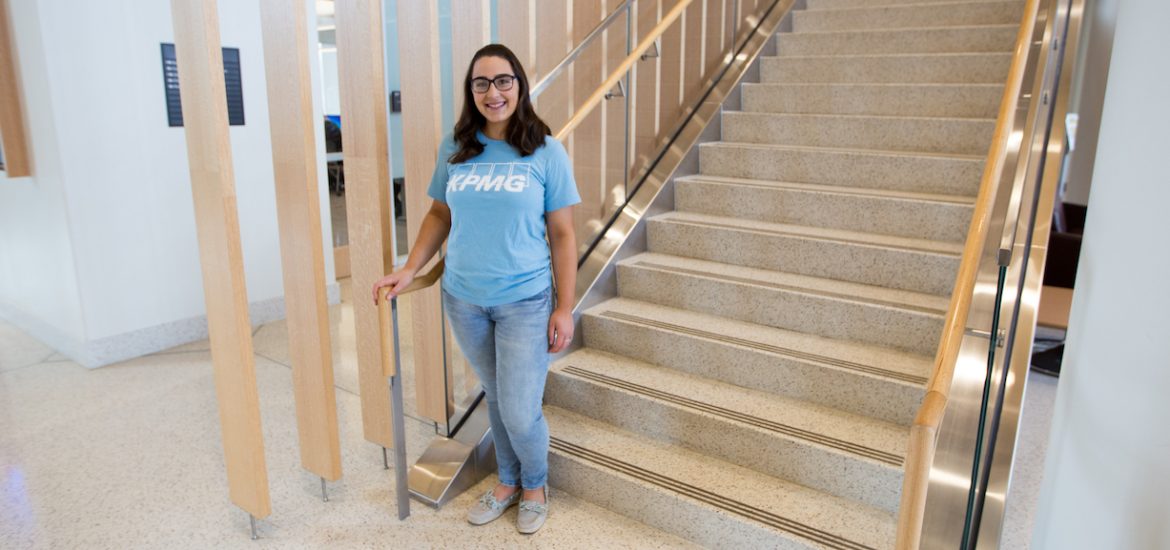
Danielle Sakowki of Freehold, Monmouth County, wasn’t kidding when she said she takes her learning beyond the classroom… she was talking 75 hours a week! Through a supervised internship course taken January through March, Danielle received 3 credits for a paid internship with KPMG, one of the Big 4 Firms in accounting. KPMG is one […]
Sophomore Finance Major Davon Dickson

Full time student taking on five to six classes a semester. Employee with H&R Block. Secretary of fraternity Alpha Phi Delta. Bowling coach and student tutor. How does sophomore finance major Davon Dickson, of Logan Township (Gloucester County) balance it all? “It’s a lot of work, but I know it will pay off. My experiences are […]
Ingredients for a Great Career: The Office of Career Advancement Gives Students the Recipe for Success

The Office of Career Advancement at Rowan hosted a workshop to help students learn more about internships, career paths and conflict resolution within the workplace. Students of all majors were encouraged to bring their resumes and discover valuable techniques for success. Dr. Alicia Monroe, assistant director of the OCA, and Dean of Students Richard Jones […]
Vanessa, College of Communication & Creative Arts at Rowan University [VIDEO]

Hey! I’m Vanessa, a junior at the College of Communication & Creative Arts. I’m thrilled to introduce you to my College, and to Rowan University. Like what you see? Register for a tour or open house. Related stories: Carlo’s Day at Rowan University [Video] College Essay Advice [Video] Roommates Reflect: What It’s Really Like to […]
#PROFspective: Geography Major Shane Walsh

Today, we speak with Shane Walsh, a geography major from Gloucester County, NJ, who commutes. Shane will share his #PROFspective with us on what it’s like to be an adult learner at Rowan University and how he’s getting the most out of being a Rowan Prof. Name: Shane Canyon Walsh Major: Geography Minors and Concentrations: […]
#PROFspective: Psychology and Sociology Major Jeraca Marsh

Today, we speak with Jeraca Marsh, a senior psychology and sociology major from Burlington City (Burlington County), NJ, who resides on campus in Holly Pointe Commons. Jeraca will share her #PROFspective with us on what it’s like to be a Rowan University student and how she’s getting the most out of her college experience as a […]
20 Minute Radius: The Deptford Mall

Gossip Girl’s Blair Waldorf said it best: “Whoever said money can’t buy happiness clearly didn’t know where to shop.” I’m admittedly a bit of a shopaholic. My study breaks consist of online shopping and searching Pinterest for outfit ideas. I’m the Director of T-Shirt Design for my sorority, Alpha Sigma Tau, in part because of […]
Behind the Scenes: Student Worker has Amazing First Week [VIDEO]

Being a brand new student worker for this blog presents many opportunities for me to experience real-life jobs within my field such as interviewing people, becoming a photographer and editing photos, publishing my own articles and working with a team to generate content for the blog. Being a public relations major, it’s great that I get […]
#PROFspective: Psychology Major Carly Sanchez

Today we speak with Carly Sanchez, a junior psychology major from Edison, Middlesex County, who lives on campus in the Rowan Blvd Apts (Robo). Carly will share her #PROFspective with us on what it’s like to be a Rowan University student and how she’s getting the most out of her college experience as a Rowan Prof. Name: Carly Sanchez Major: Psychology […]
#PROFspective: Communications Studies Major
Hamish James Silva

Today we speak with Hamish James Silva, a junior communications studies major from Hammonton, Atlantic County, who lives off campus with friends. He will share his #PROFspective with us on what it’s like to be a Rowan University student and how he’s getting the most out of his college experience as a Rowan Prof. Name: Hamish James Silva Major: […]
#PROFspective: Athletic Training Major, Cassie

Today we talk with Cassie D., a senior athletic training major from Edison, Middlesex County, who lives on campus at Whitney Center. Cassie will share her #PROFspective with us on what it’s like to be a Rowan University student and how she’s getting the most out of her college experience as a Rowan Prof. Name: […]